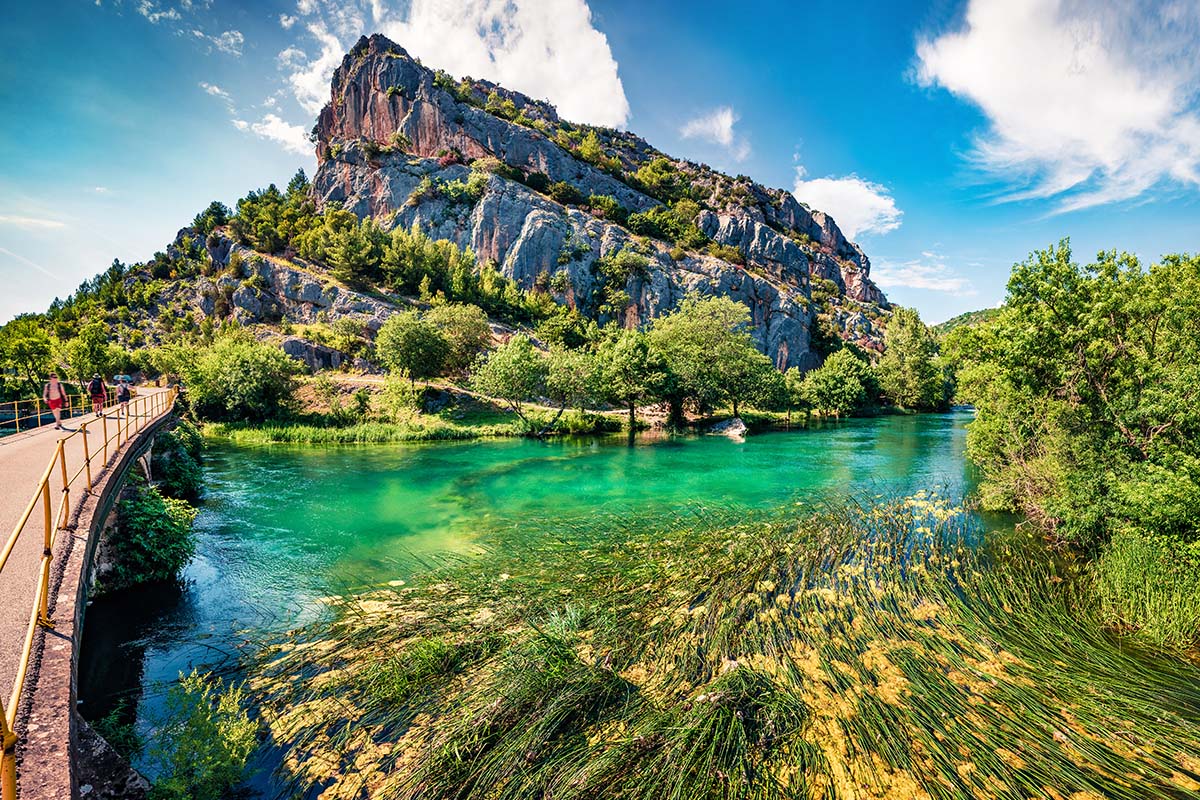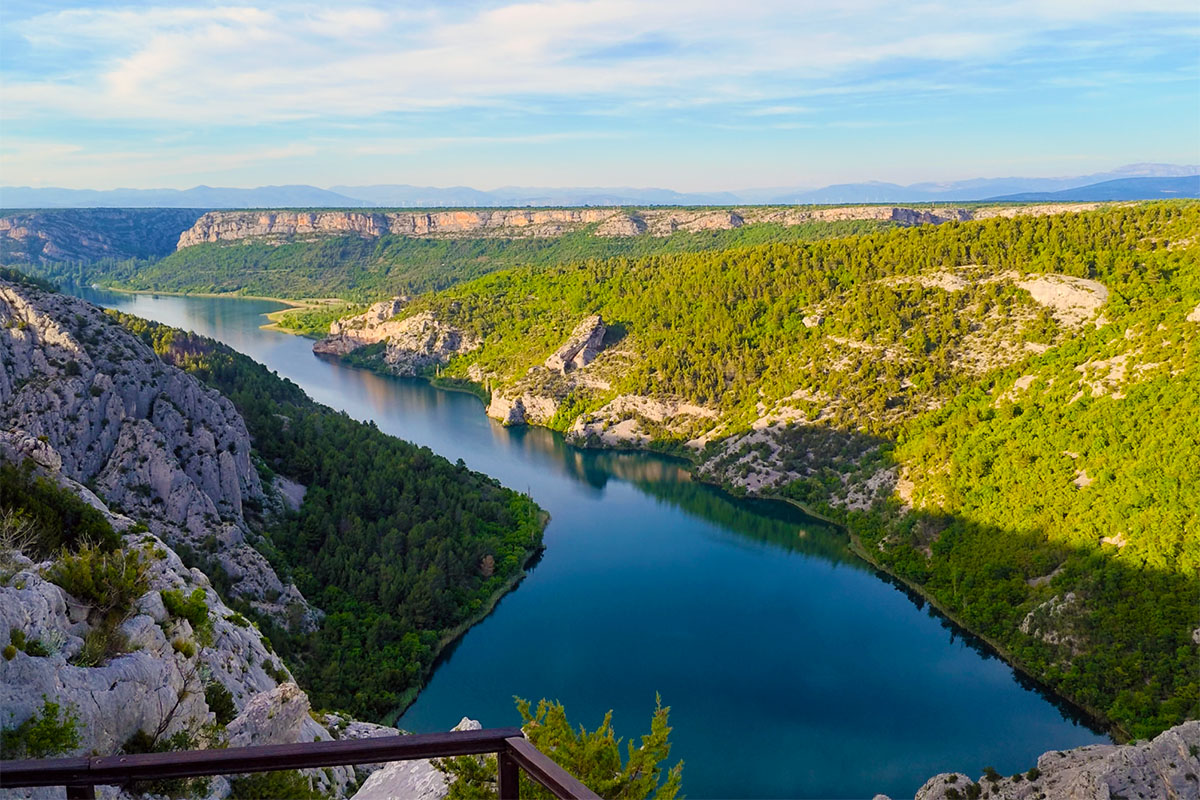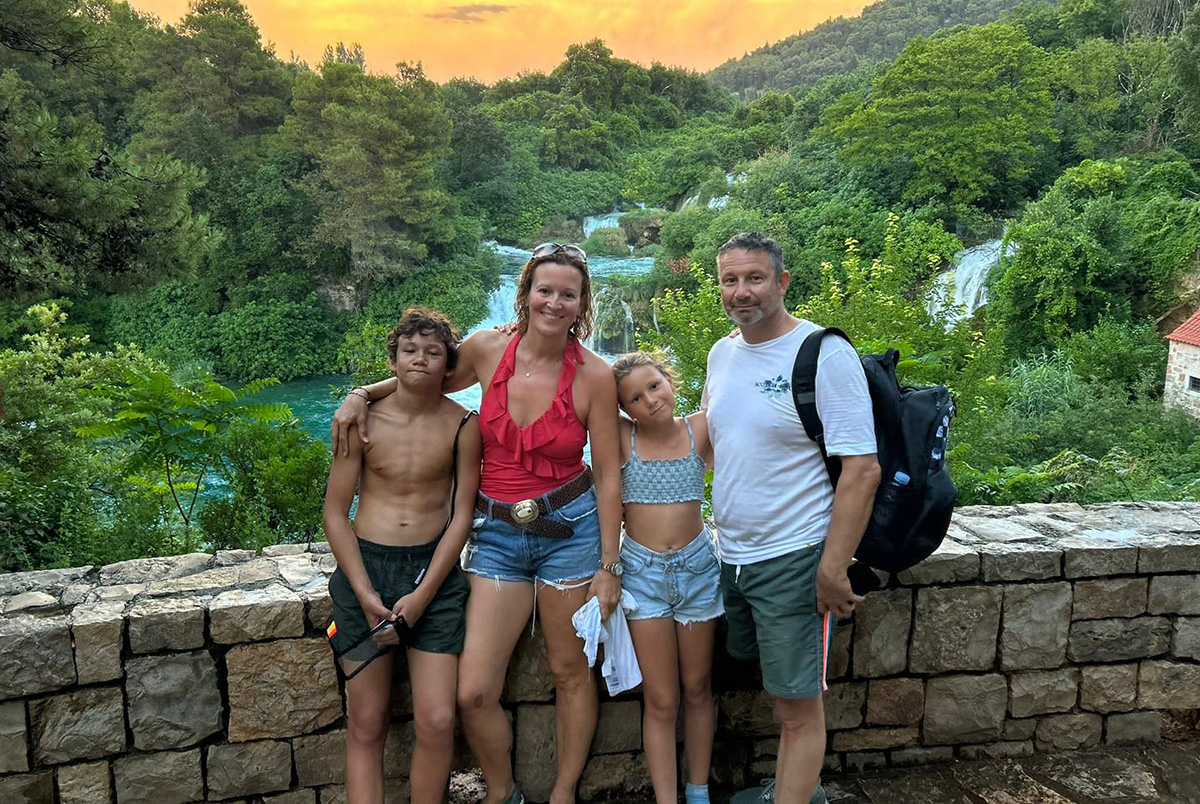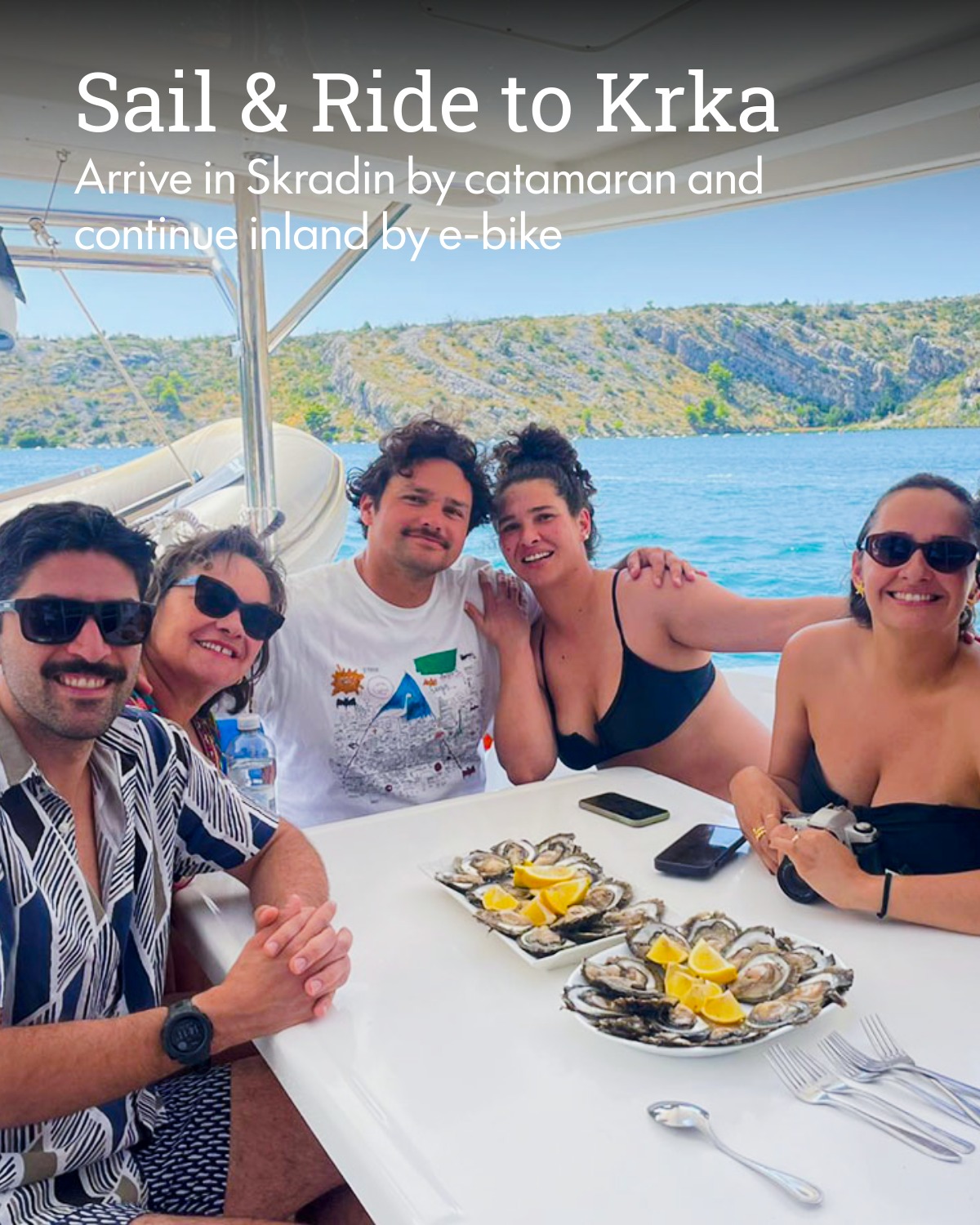
Krka National Park is located in central Dalmatia, in Šibenik-Knin County, just inland from the Adriatic coast and the historic city of Šibenik. The park follows the course of the Krka River, which flows from the Dalmatian hinterland towards the sea, creating waterfalls, lakes, canyons, viewpoints, and some of the most recognizable natural scenery in Croatia.
One of the main reasons Krka is so popular is its accessibility. Unlike some national parks that require long mountain drives or complicated planning, Krka can be reached easily from several major coastal towns and travel routes. It is close to Šibenik, within comfortable distance from Split and Zadar, and directly connected with Skradin, the small riverside town that serves as one of the most beautiful gateways to the park.
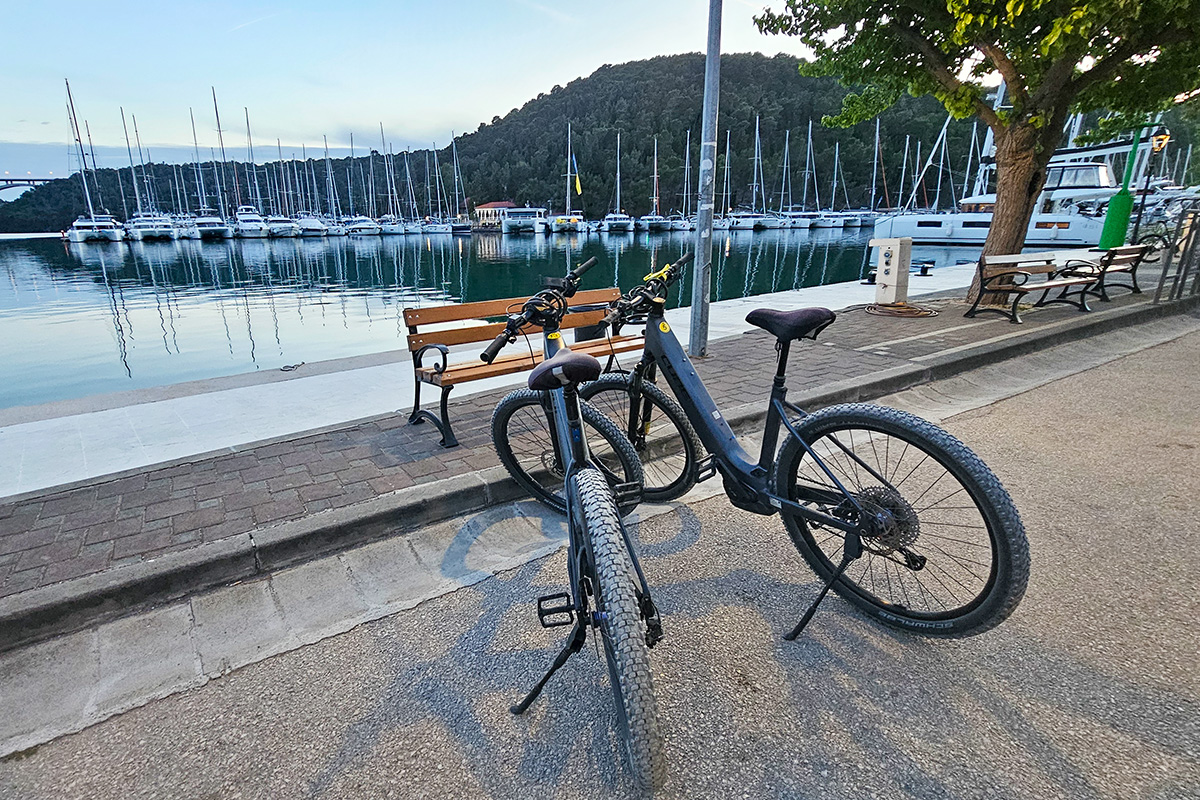
For most first-time visitors, Skradin is the most memorable entrance point. From here, travellers usually continue towards Skradinski Buk, the most famous waterfall area of Krka National Park. Skradin is also an important stop for sailors, because boats and catamarans can reach the town by navigating through the Šibenik channel and the Krka River canal.
This makes Krka National Park unique in Croatia. It is not only a place you reach by road. It can also be approached from the sea, through a dramatic river landscape that connects the Adriatic coast with inland Dalmatia.
Krka National Park has several entrances and access areas, depending on which part of the park you want to visit.
Skradin is the most popular access point for visiting Skradinski Buk. It is ideal for travellers who want to combine the park with a visit to the town, river scenery, e-bike routes, or sailing arrival.
Lozovac is another common entrance for Skradinski Buk and is often used by visitors arriving by car or organized day tours.
Roški Slap and Laškovica are useful access points for exploring the upper part of the park, including Roški Slap, viewpoints, and quieter inland landscapes.
Burnum and Puljane are better suited for visitors interested in archaeology, Roman heritage, educational trails, and the wider cultural side of Krka National Park.
Skradin is much more than a practical entrance to Krka National Park. It is a small historic town on the Krka River, surrounded by hills, water, marina life, cycling routes, and one of the most scenic approaches to the park.
For guests arriving by sailboat or catamaran, Skradin is the natural inland highlight of the journey. After sailing through the Šibenik archipelago and entering the Krka canal, the arrival to Skradin feels completely different from a standard road-based day trip. The sea gradually turns into river, the landscapes become greener, and the journey continues from the coast into the heart of Dalmatian nature.
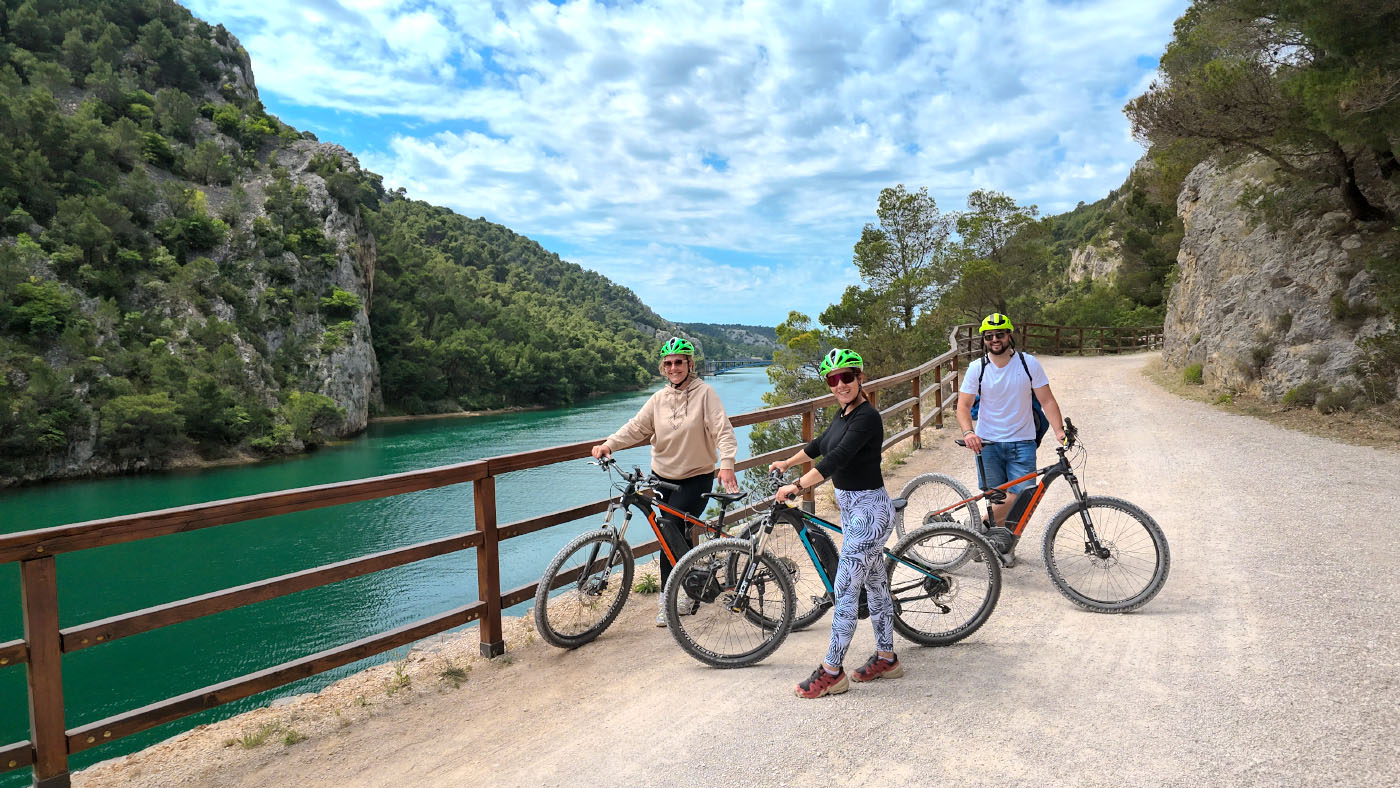
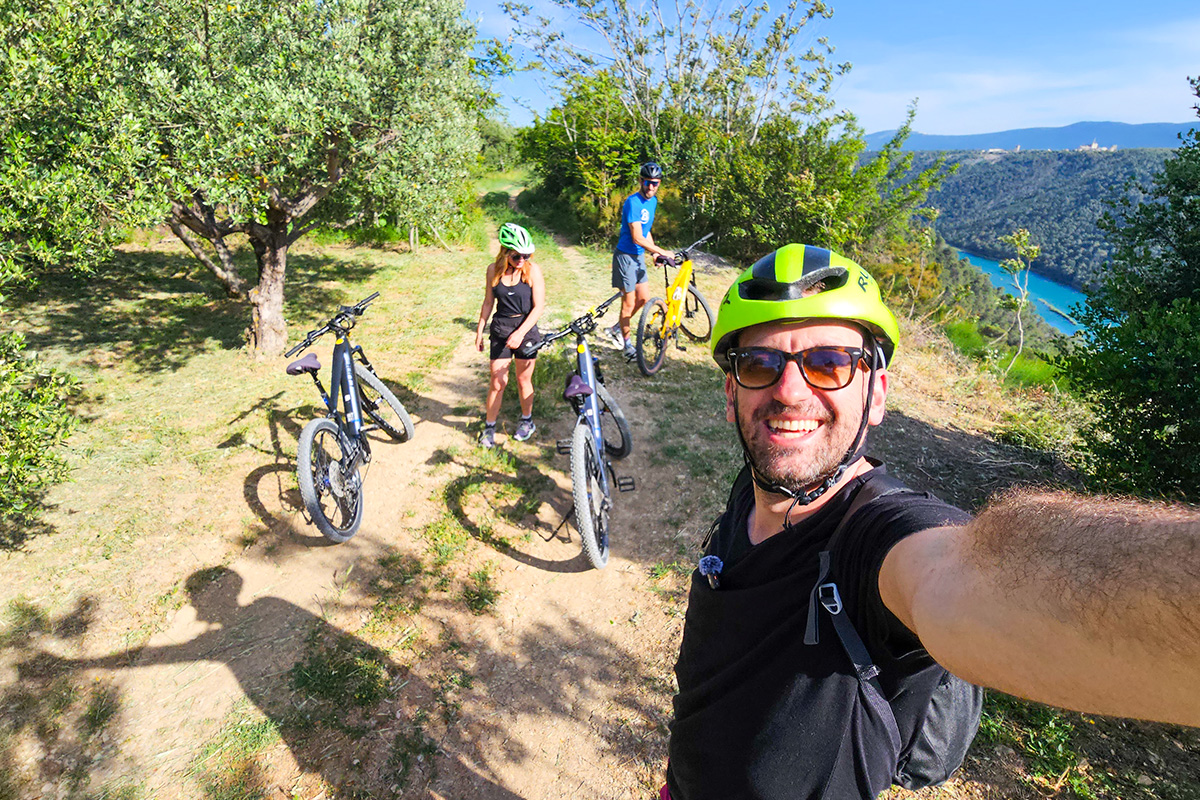
For active travellers, Skradin is also one of the best starting points for exploring Krka by e-bike. From here, guests can choose an easy self-guided ride towards Skradinski Buk or a longer guided route that reaches viewpoints, Roški Slap, Visovac Lake, and the lower part of Krka National Park.
In many ways, Skradin is where the best Krka experiences begin. It connects the river, the national park, cycling routes, sailing access, and the slower rhythm of inland Dalmatia.
What to See in Krka National Park
Krka National Park is best known for its waterfalls, but the park is much more than one famous photo stop. The Krka River flows through a landscape of cascades, lakes, canyons, viewpoints, monasteries, old mills, archaeological sites, and quiet inland routes. This variety is what makes Krka different from a simple waterfall visit.
Most first-time visitors focus on Skradinski Buk, and for a good reason. It is the most famous and accessible part of the park. But travellers who have more time, or who explore Krka by bike, car, boat, or guided tour, can discover a much wider side of the national park.
Skradinski Buk
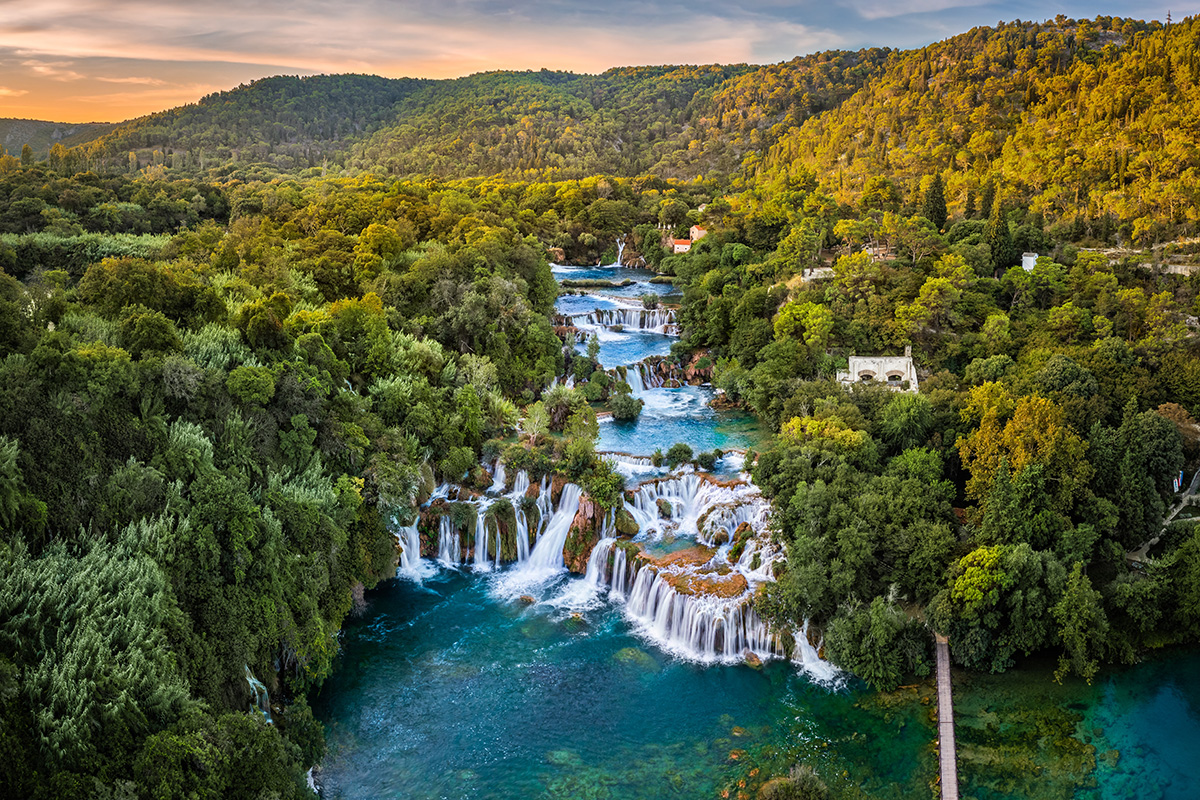
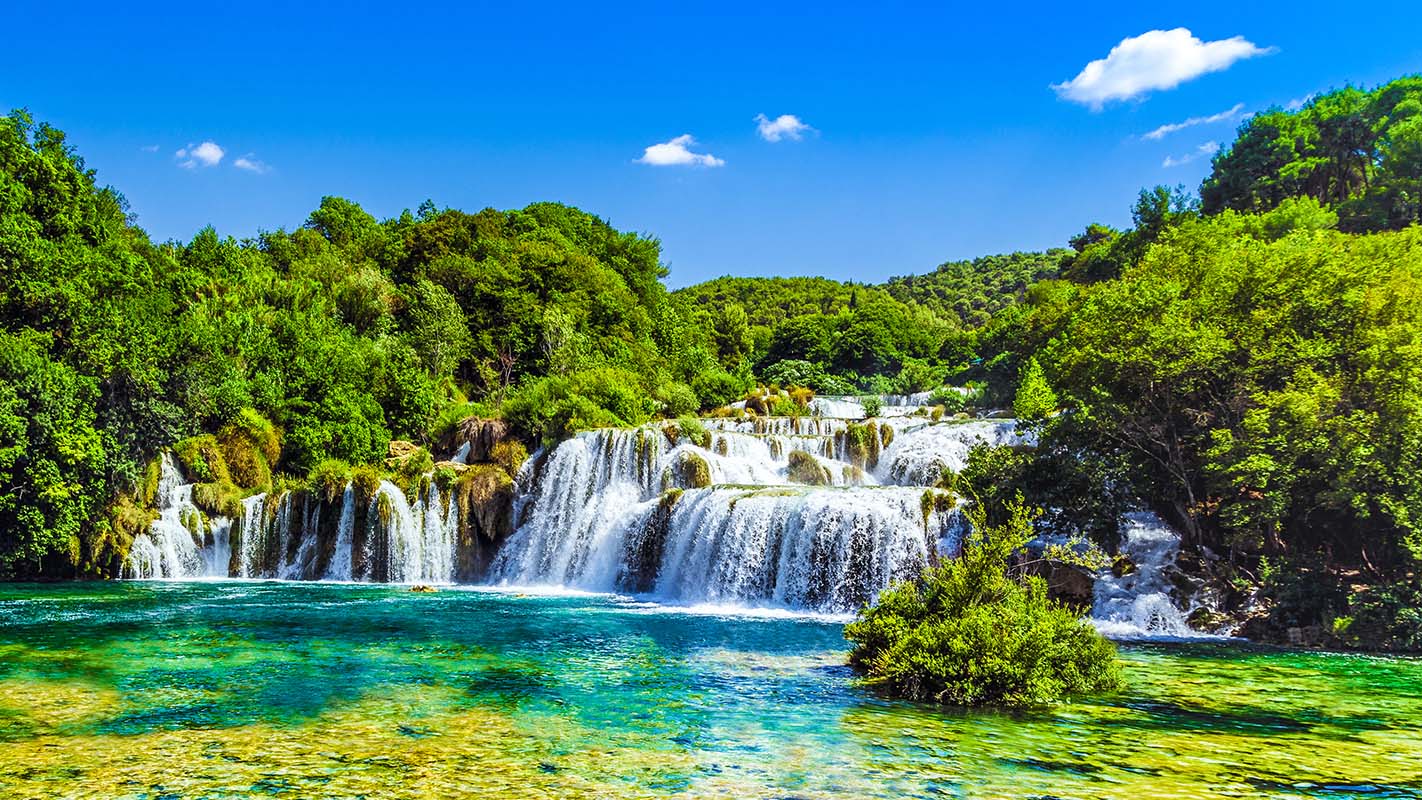
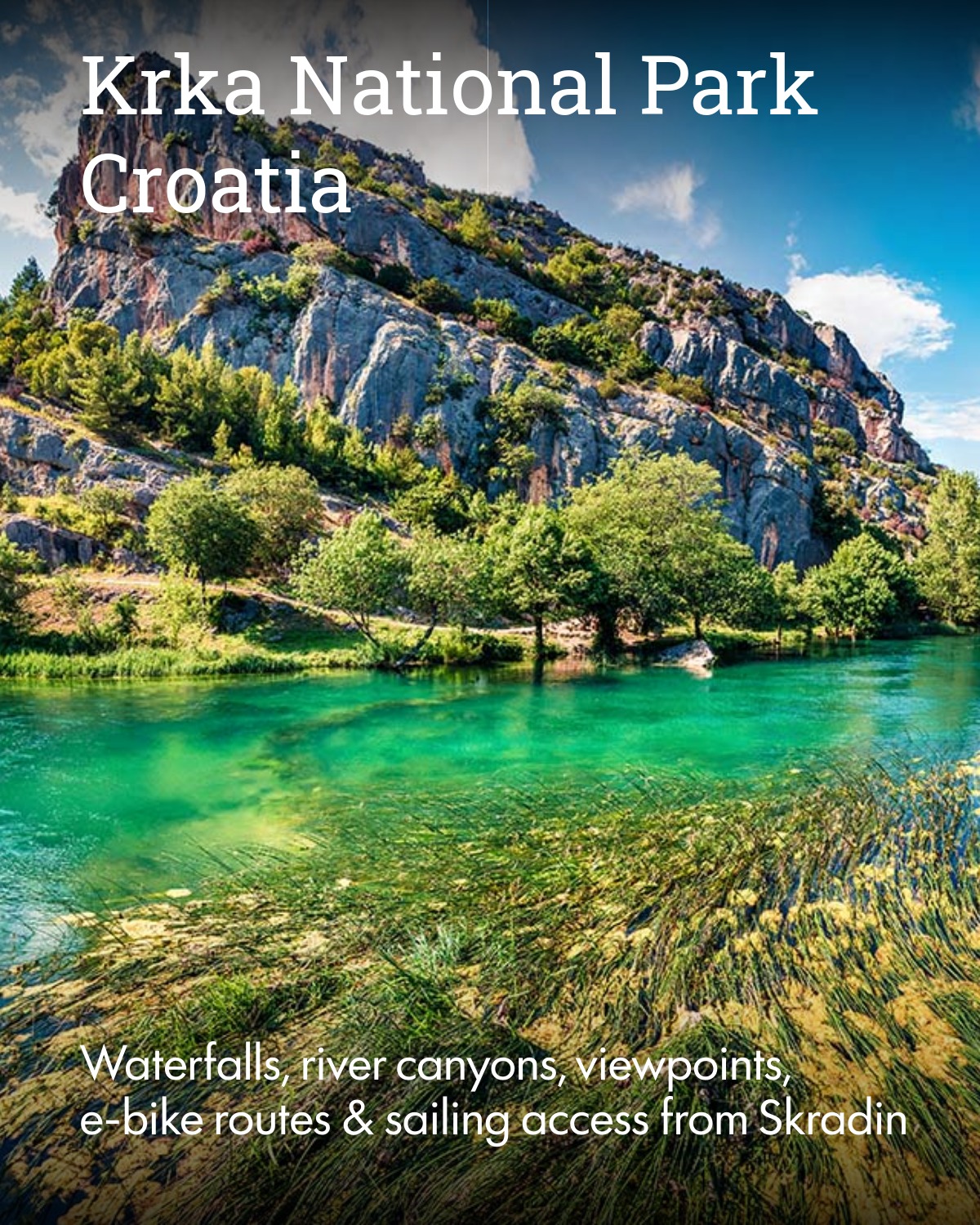
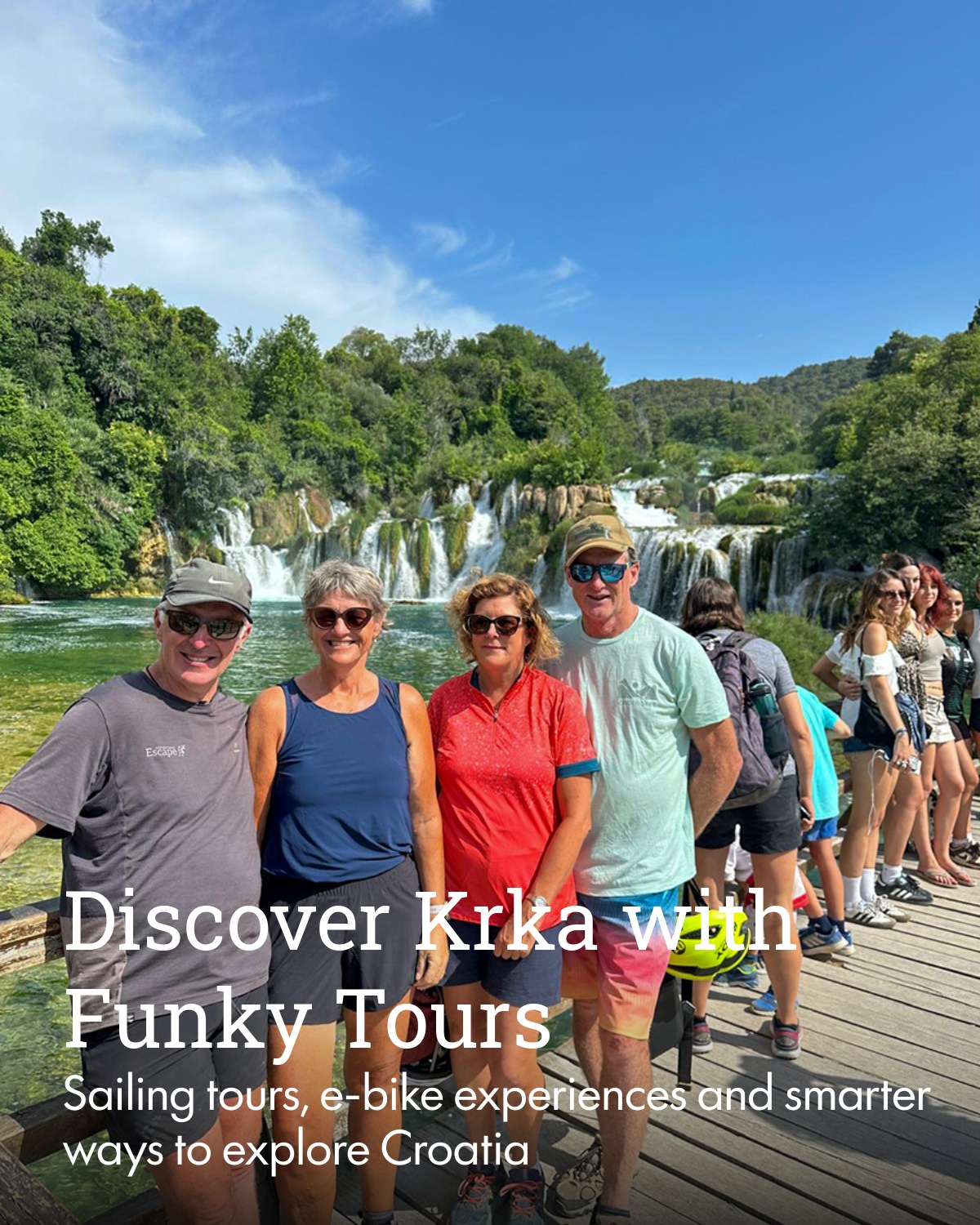
Skradinski Buk is the most famous attraction in Krka National Park and the area most visitors imagine when they think of Krka. It is a beautiful waterfall system where the Krka River spreads into cascades, streams, pools, and wooden walking trails.
This is the classic Krka experience: walking over wooden paths, listening to the sound of waterfalls, passing old watermills, and enjoying one of the most scenic natural areas in Dalmatia.
For visitors starting from Skradin, Skradinski Buk is usually the main goal. It is also the key highlight of our self-guided e-bike option, and the final highlight of our fully guided afternoon e-bike route.
Roški Slap
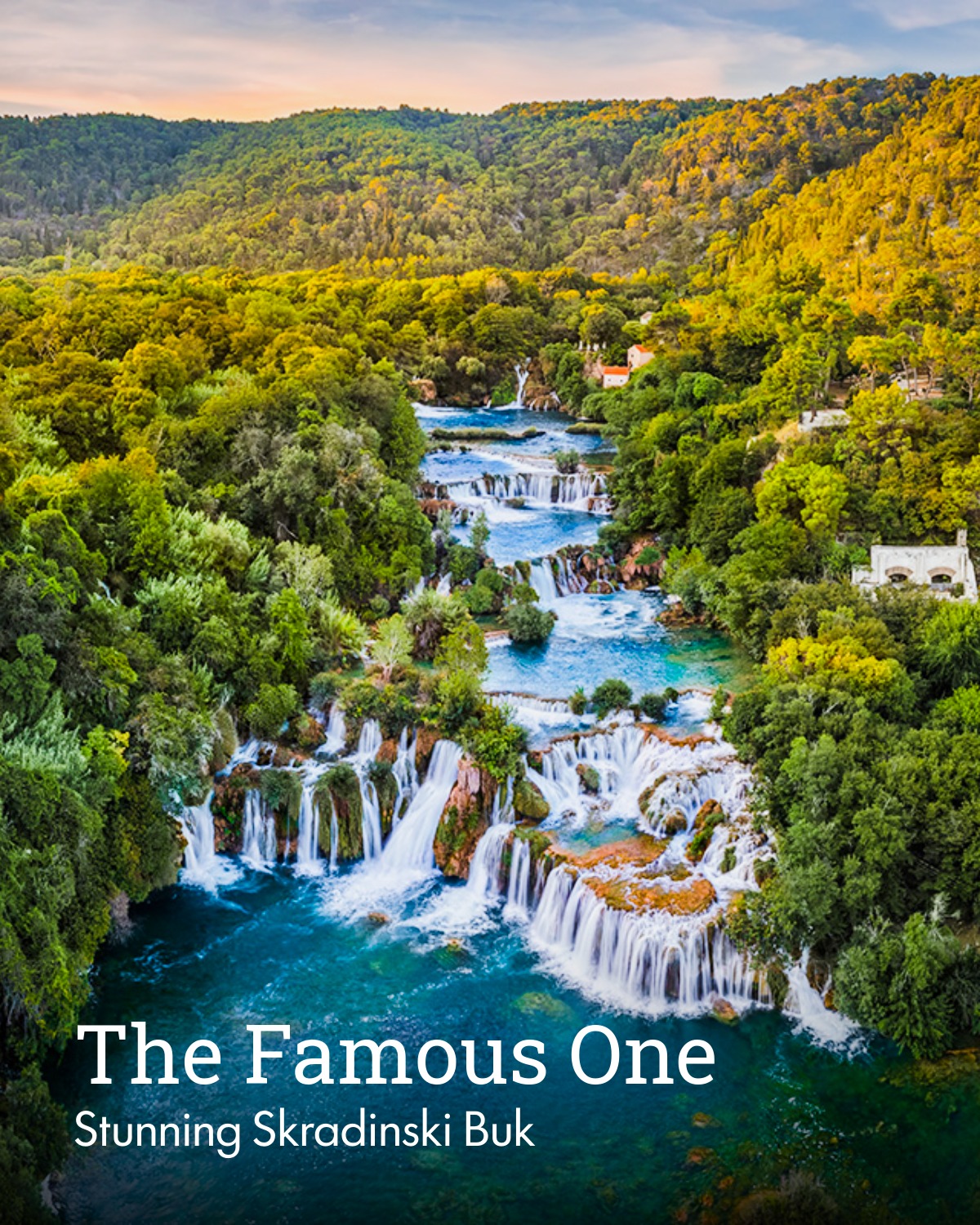
Roški Slap is located in the upper section of Krka National Park and offers a different atmosphere from Skradinski Buk. It is quieter, more spacious, and surrounded by a beautiful river landscape.
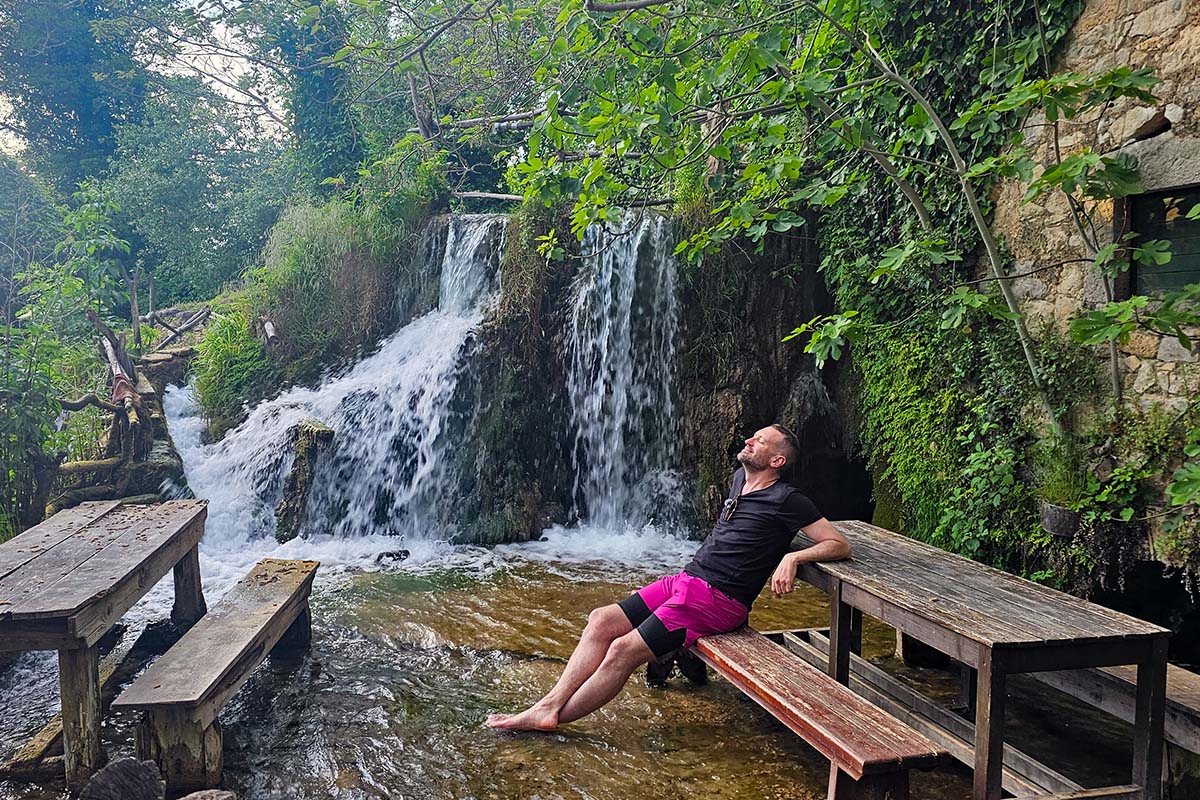
This area is especially interesting for visitors who want to experience more than the busiest part of the park. Roški Slap combines waterfalls, river scenery, traditional mills, walking areas, and a calmer national park feeling.
On our fully guided e-bike route from Skradin, Roški Slap is one of the most important highlights because it gives guests a chance to explore the wider Krka landscape before finishing the experience at Skradinski Buk.
Visovac Monastery and Visovac Lake
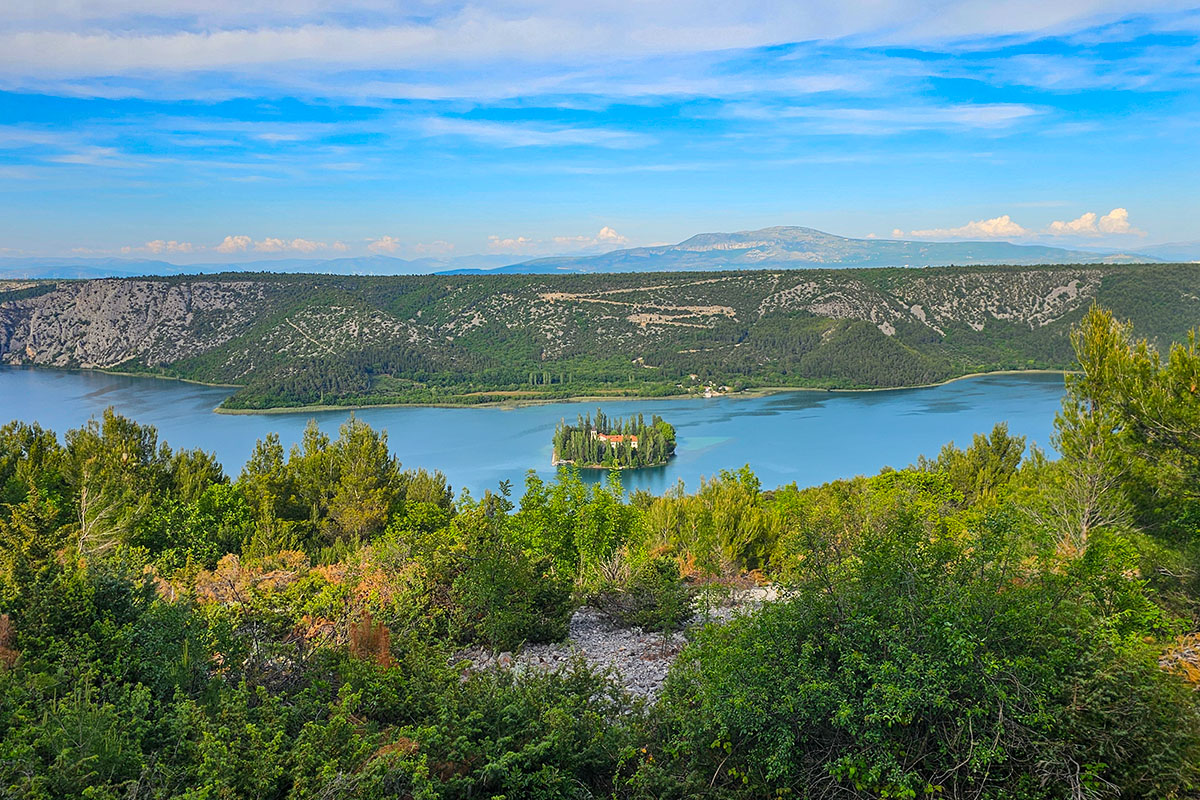
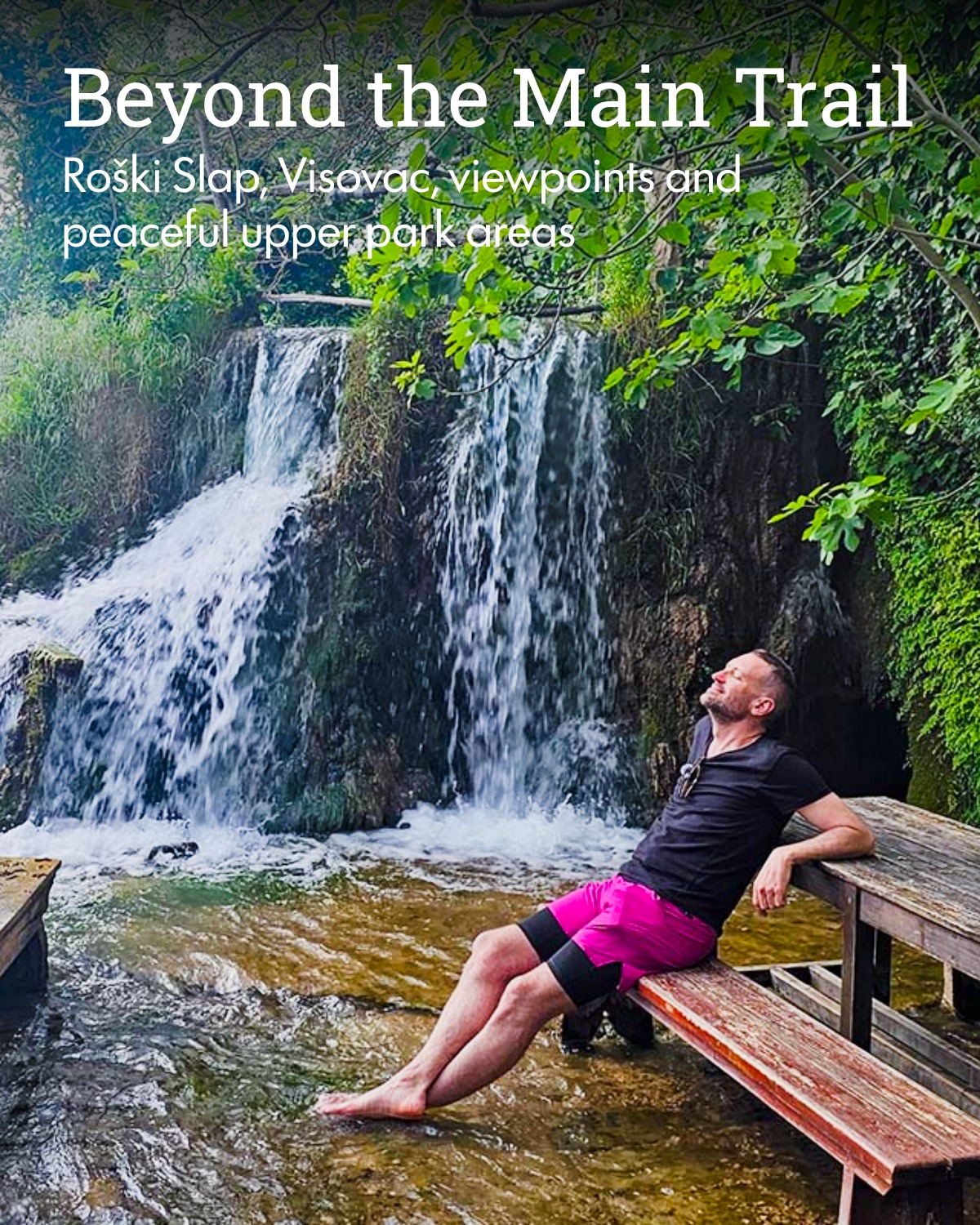
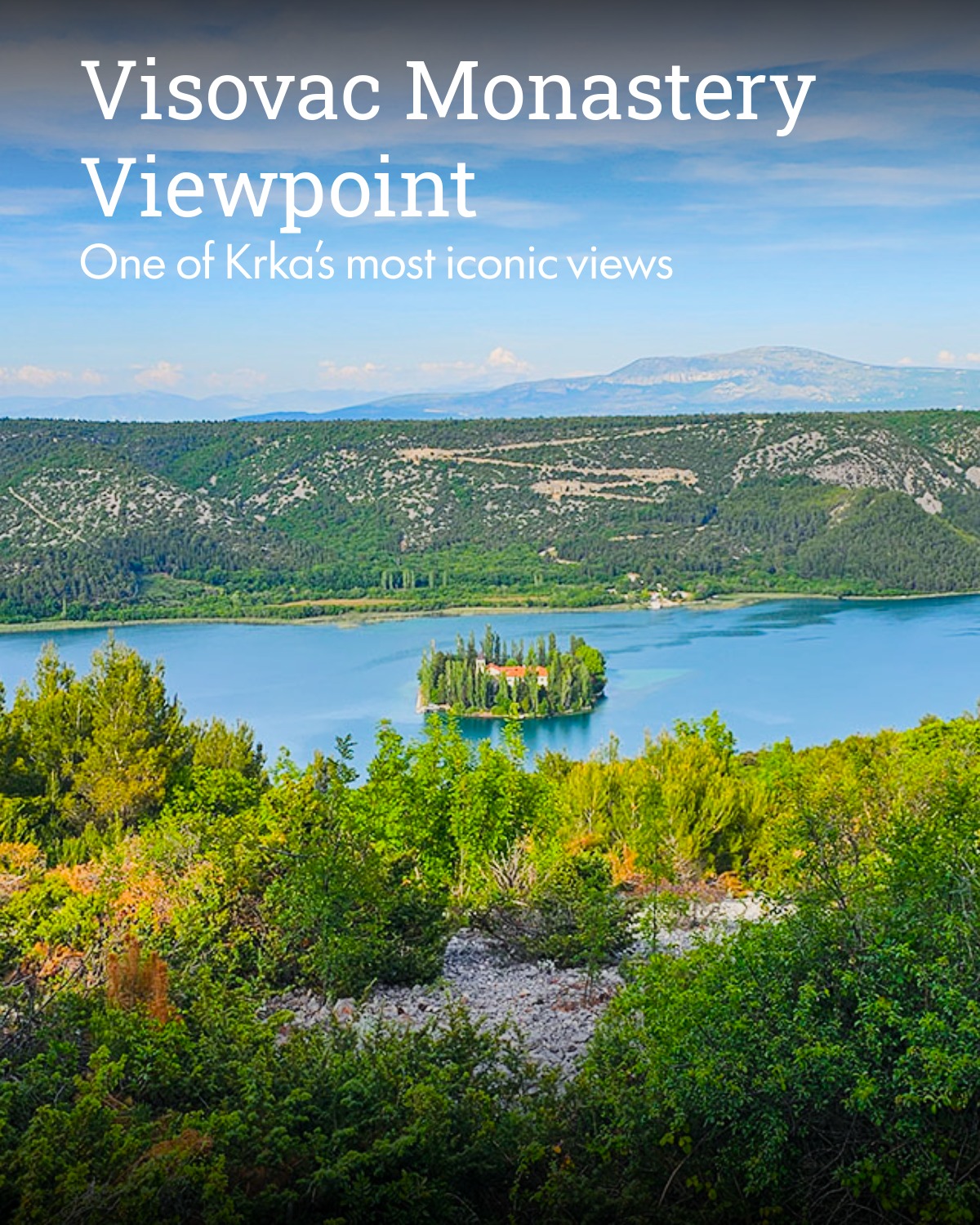
Visovac is one of the most iconic cultural and scenic symbols of Krka National Park. The small monastery island sits in the middle of Visovac Lake, surrounded by peaceful water, green hills, and dramatic views.
Many visitors experience Visovac from a boat excursion, but one of the most impressive ways to see it is from the viewpoint above the lake. From there, the monastery, lake, and surrounding landscape create one of the most memorable views in the park.
This viewpoint is included in our fully guided e-bike tour, making it one of the key reasons to choose the longer guided route.
Krka Viewpoints
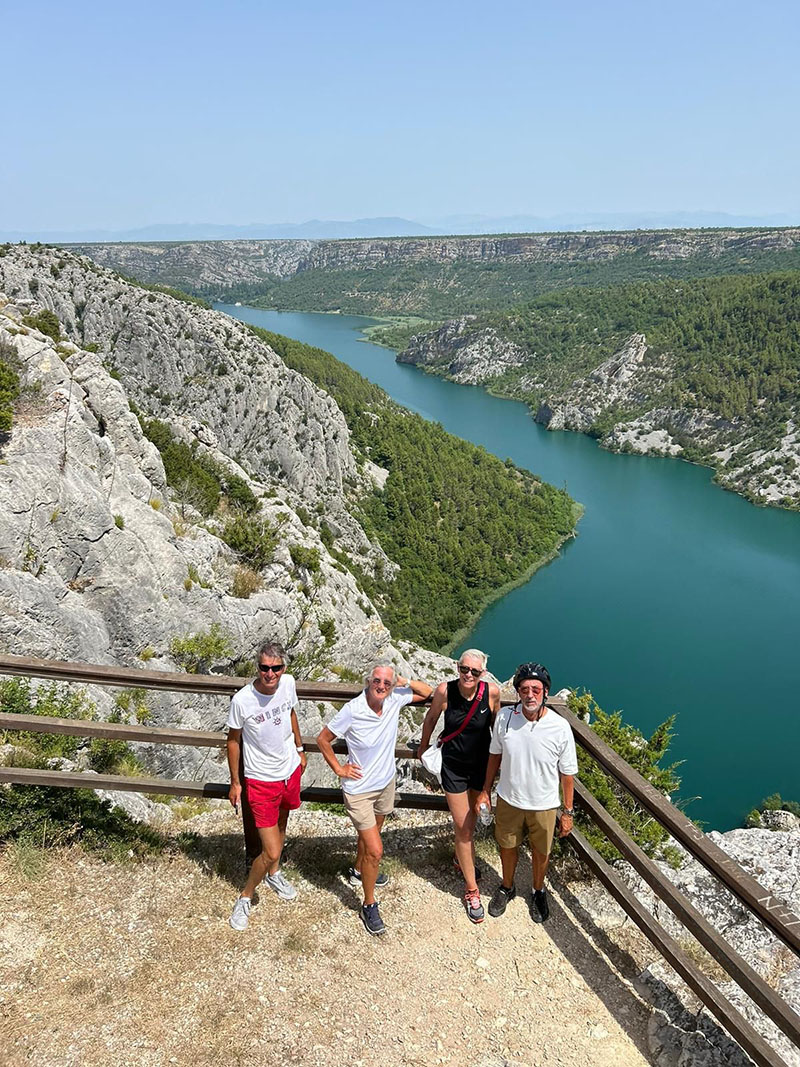
One of the best ways to understand Krka National Park is from above. The viewpoints around the park reveal how the river, canyon, lakes, waterfalls, and surrounding villages are connected.
For active travellers, these viewpoints are especially rewarding because they give a deeper sense of the landscape beyond the main walking trails. Views over Skradin, the Krka canal, Visovac Lake, and the wider river area show why Krka is not only a waterfall park, but a complete river system shaped by nature, history, and local life.
These viewpoints are among the strongest highlights of the fully guided e-bike experience.
Krka Monastery
Krka Monastery is one of the important cultural and spiritual sites in the wider national park area. Located near the river, it adds another layer to the Krka experience by connecting nature with history, religion, and local heritage.
For visitors interested in more than waterfalls, Krka Monastery helps show how the river has shaped not only the landscape, but also human life in this part of Dalmatia.
Burnum Roman Site
Burnum is the archaeological side of Krka National Park. It was once a Roman military site, and today it gives visitors a completely different perspective on the area.
While waterfalls and river landscapes are the main reason most people visit Krka, Burnum is a reminder that this region has been important for thousands of years. It is best suited for travellers interested in history, archaeology, and the deeper cultural story of inland Dalmatia.
Manojlovac Waterfall
Manojlovac is one of the impressive waterfall areas in the wider Krka landscape. It is less visited than Skradinski Buk, which makes it interesting for travellers who want to go beyond the classic route.
It is a good example of how diverse Krka National Park really is. The park is not built around one single waterfall, but around an entire river system with several cascades, viewpoints, and natural areas spread across a much larger territory.
Oziđana Pećina Cave
Oziđana Pećina Cave adds an archaeological and prehistoric dimension to Krka National Park. It is one of the places that helps visitors understand how long people have lived in and around the Krka River area.
For travellers who enjoy combining nature with history, this part of the park offers something different from the main waterfall trails.
Why You Should See More Than Skradinski Buk
Skradinski Buk is the most famous part of Krka National Park, and it is absolutely worth visiting. But Krka becomes much more interesting when you understand that the park also includes Roški Slap, Visovac, viewpoints, monasteries, archaeological sites, cycling routes, and quiet river landscapes.
That is why the way you visit Krka matters. A short visit to Skradinski Buk gives you the classic waterfall experience. A longer route, especially by e-bike or guided tour, gives you a better sense of the full park: the river, the hills, the viewpoints, the culture, and the connection between Skradin and inland Dalmatia.
Exploring Krka National Park by Bike
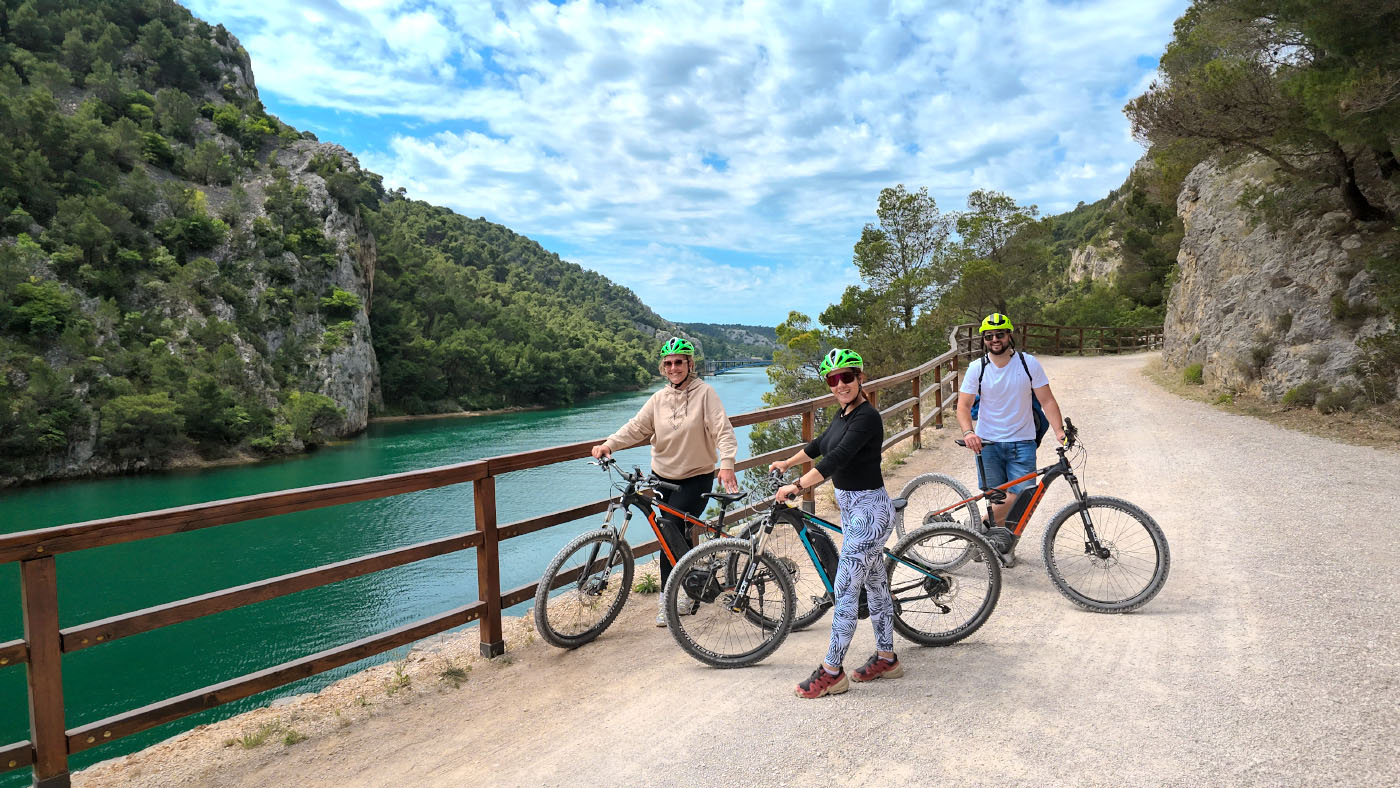
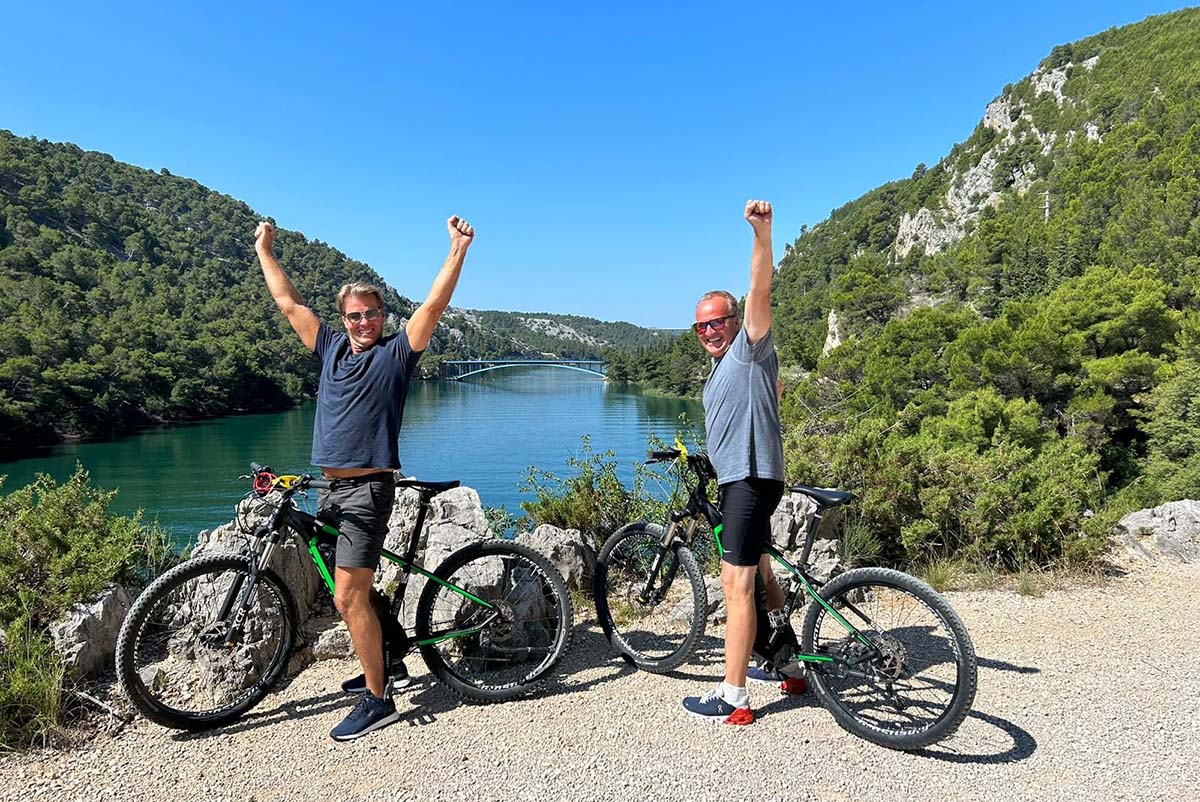
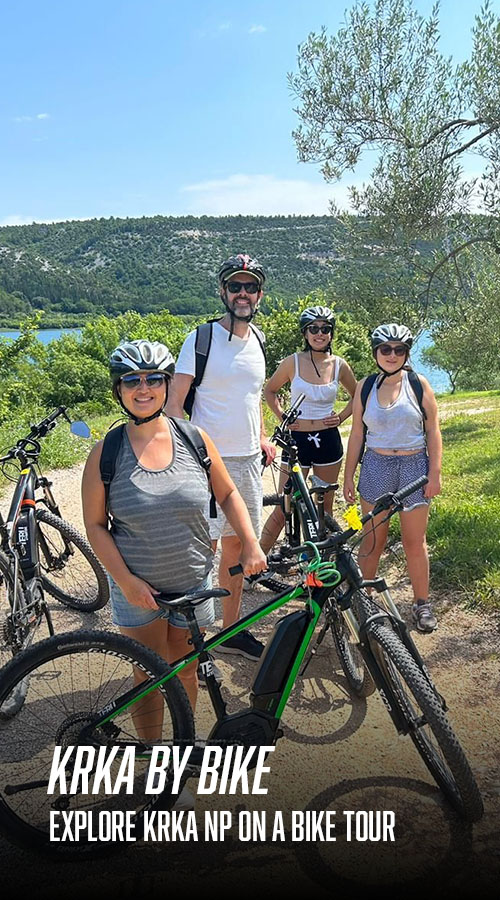
Krka National Park is not only a place for walking trails and waterfall viewpoints. It is also one of the most interesting areas in Dalmatia for cycling and e-bike experiences, especially for travellers who want to explore beyond the most visited parts of the park.
The wider Krka area offers a mix of riverside roads, quiet inland routes, panoramic viewpoints, village landscapes, and access to some of the park’s most beautiful natural and cultural sites. By bike, the park feels different.
Instead of arriving directly at one entrance and visiting only the busiest waterfall area, cycling allows travellers to understand the wider geography of Krka: the river, the canyon, the lake areas, the viewpoints, and the connection between Skradin, Roški Slap, Visovac, and Skradinski Buk.
This is where e-bikes make a big difference. The Krka landscape is beautiful, but it is not completely flat. There are climbs, descents, local roads, and longer distances between some of the key attractions. With an e-bike, the experience becomes more comfortable and accessible, allowing guests to cover more ground without needing to be highly trained cyclists.
Why Choose an E-Bike in Krka?
An e-bike is one of the best ways to experience Krka National Park if you enjoy active travel, nature, and scenic routes, but still want the ride to feel relaxed and manageable.
With an e-bike, you can:
For many visitors, this creates a better balance. You still see the famous highlights, including Skradinski Buk, but you also experience the landscapes around the park, not only the final destination.
Bike Routes from Skradin
Skradin is one of the best starting points for cycling and e-bike tours in the Krka area. The town is located directly by the Krka River and offers easy access towards the lower part of the park, especially Skradinski Buk.
For travellers who want a simple and lighter experience, the most common route is the shorter ride from Skradin towards the Skradinski Buk entrance. This option is ideal for guests who want to combine an easy e-bike ride with the classic Krka waterfall visit.
For travellers who want a more complete experience, a longer guided e-bike route can connect Skradin with panoramic viewpoints, Visovac Lake, Roški Slap, and finally Skradinski Buk. This type of route gives a much deeper understanding of Krka National Park because it includes both the upper and lower sections of the park.
Self-Guided E-Bike Route from Skradin
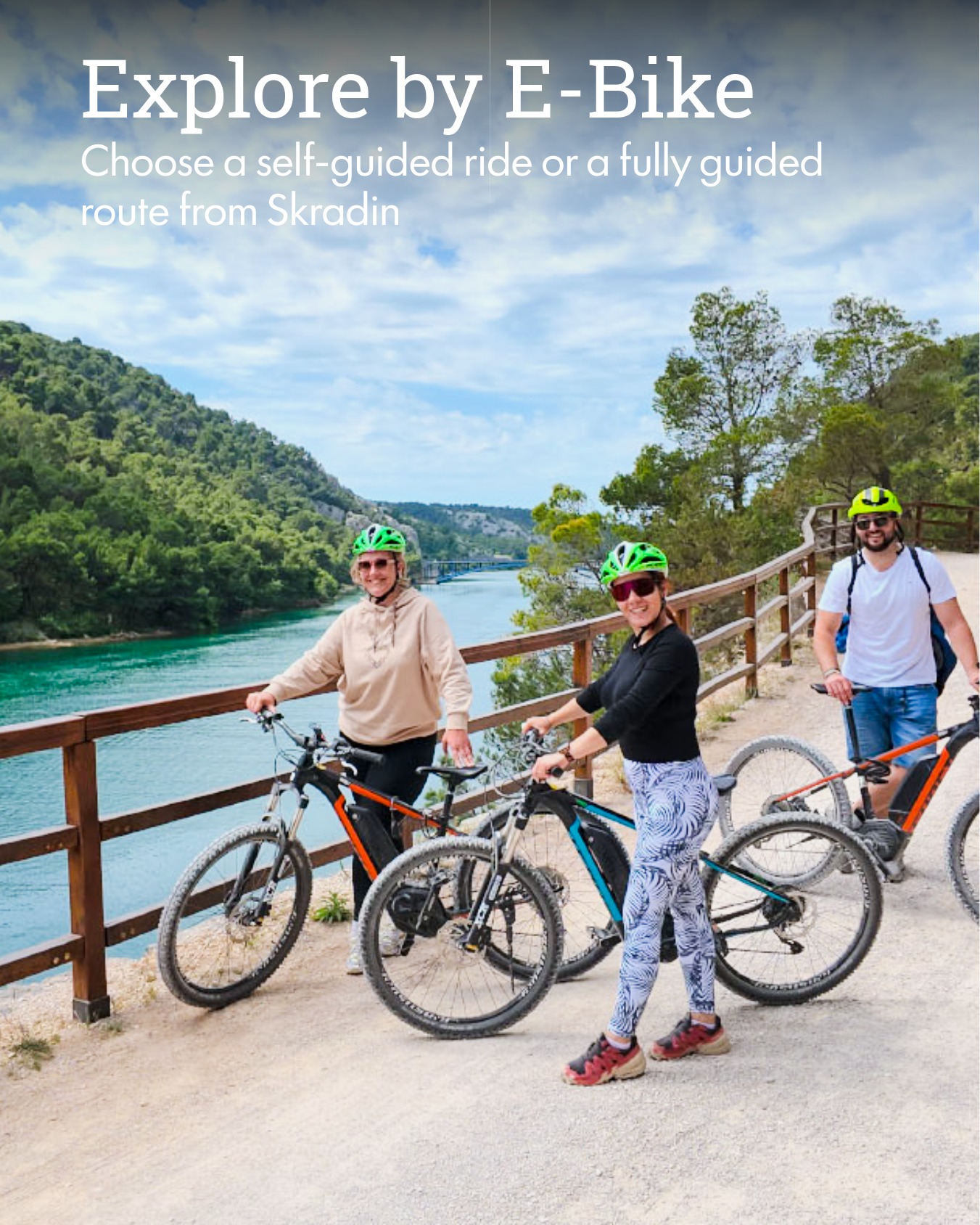
The self-guided e-bike option is designed for travellers who prefer flexibility and independence. It is shorter, easier, and focused mainly on the lower section of Krka National Park.
The most frequent route starts in Skradin and follows the Krka canal area towards the Skradinski Buk entrance. After the ride, guests visit the most famous part of the park, including wooden walking trails, old mills, water channels, and the waterfall area around Skradinski Buk.
This option is best for travellers who want:
It is also a good choice for guests who do not want a long cycling route, but still want to add an active element to their Krka visit.
Fully Guided E-Bike Route from Skradin
The fully guided e-bike route is designed for travellers who want to experience more of Krka National Park and the surrounding landscape.
This longer route usually covers around 40 kilometres by e-bike and includes some of the most scenic areas of the wider park region. With a bike guide and road support included, guests can enjoy the ride without worrying about navigation, route planning, or technical issues along the way.
The guided route includes highlights such as:
This option is best for travellers who want:
The fully guided route is especially attractive in the afternoon, because the timing can be planned so that guests reach Skradinski Buk later in the day, when many visitors are already leaving the park.
Connecting Bike Routes with the Best Time to Visit
Timing matters in Krka National Park. During the busy season, Skradinski Buk can be very crowded in the middle of the day. This is why afternoon e-bike departures from Skradin can be a smart choice.
Instead of visiting the park at peak hours, guests can start later, enjoy the cycling route first, and reach Skradinski Buk during the quieter late-day period. This is especially valuable for travellers who want a more peaceful experience of the wooden trails, mills, and waterfalls.
For sailing guests arriving in Skradin by catamaran, this timing works naturally. After docking in town, the Krka experience can continue inland by e-bike, turning the afternoon into an active and memorable extension of the sailing journey.
Our Krka E-Bike Experience from Skradin
For guests who want to explore Krka by e-bike, Funky Tours offers two options starting from Skradin.
The self-guided e-bike package includes an e-bike, Krka National Park entrance ticket, route briefing, and support in case of bike-related issues. It is focused mainly on the shorter route to Skradinski Buk.
The fully guided afternoon e-bike tour includes an e-bike, Krka National Park entrance ticket, bike guide, road support, and a longer scenic route covering viewpoints, Roški Slap, Visovac Monastery viewpoint, and Skradinski Buk.
Both options are created around the same idea: to make Krka more active, more scenic, and easier to experience from Skradin, while giving guests the choice between flexibility and full guidance.

All-inclusive afternoon e-bike experience with Krka National Park visit
⛵ Modern catamaran
👥 Small group sailing
🍽 Half-board included
🍷 Authentic Adriatic experiences
Reaching Krka National Park by Sailing Boat
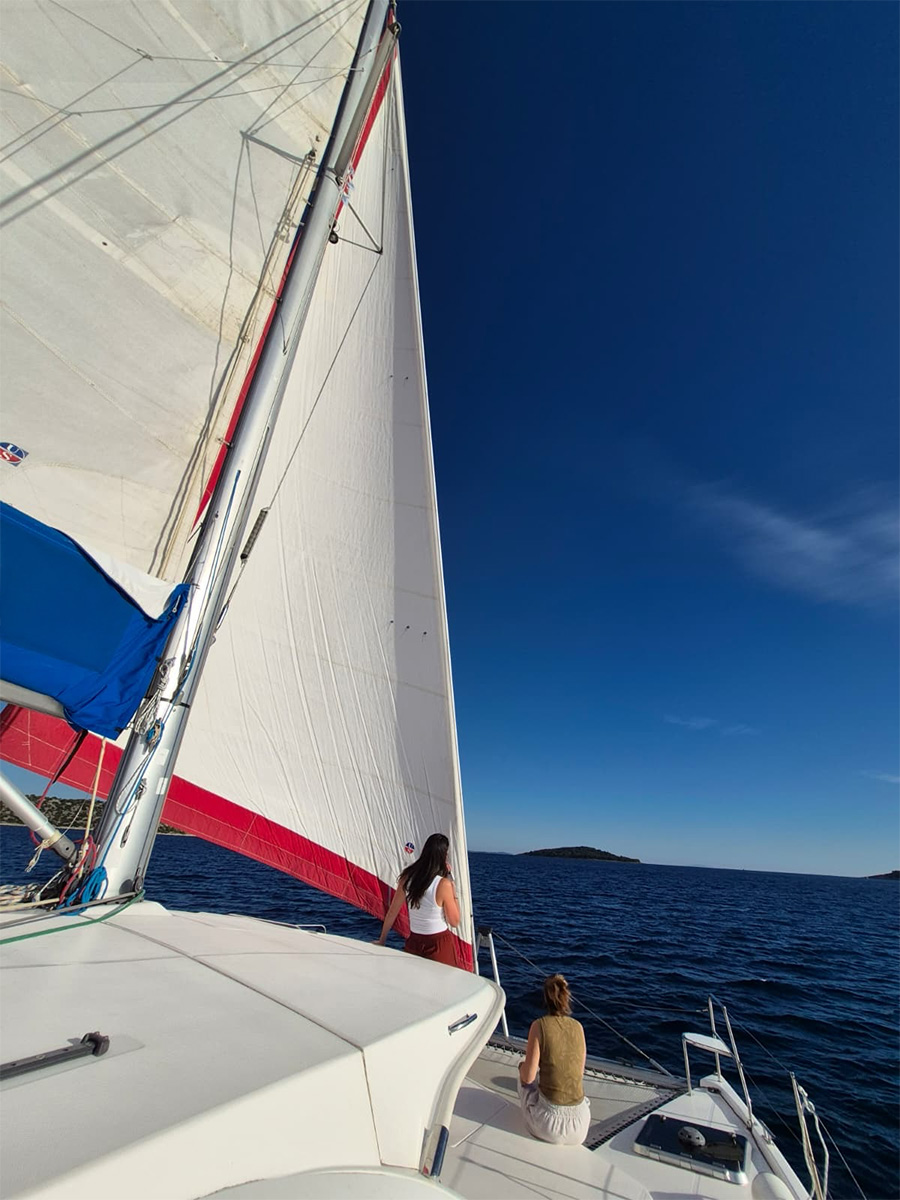
One of the most special ways to experience Krka National Park is by arriving from the sea. While many visitors reach the park by car, bus, or organized day trip, sailing guests approach Krka through a completely different landscape: from the Adriatic Sea, through the Šibenik archipelago, into the Krka canal, and finally towards the riverside town of Skradin.
This route is one of the most unique sailing experiences in Dalmatia. The journey gradually changes from open sea and islands into a calm river environment surrounded by green hills, cliffs, small settlements, and the protected inland scenery of the Krka River.
For travellers sailing in the Šibenik region, Skradin is the natural gateway to Krka National Park. After docking in Skradin marina, guests are already perfectly positioned to continue towards the park, either by walking, park boat transfer, organized visit, or e-bike experience.
Why Skradin Is Perfect for Sailing Guests
Skradin is one of the rare places in Croatia where a sailing itinerary can connect directly with a national park experience. Instead of finishing the day only with a marina stop, guests can continue inland and explore one of Croatia’s most famous natural areas.
This makes Skradin especially valuable on a Croatia sailing route. It offers a different rhythm from the islands and coastal towns. After days of swimming, sailing, bays, and islands, Krka brings waterfalls, river landscapes, walking trails, viewpoints, and a completely different side of Dalmatia.
For our sailing guests, this is exactly why Skradin is such an important part of the route. It allows the journey to move naturally from sea to river, from islands to waterfalls, and from catamaran life to inland exploration.
What to Do After Docking in Skradin
Once the boat is docked in Skradin, guests have several ways to experience Krka National Park.
The most classic option is to visit Skradinski Buk, the most famous waterfall area of the park. This is the best-known part of Krka, with wooden walking trails, old mills, river channels, and waterfalls.
For guests who want a more active experience, e-biking is one of the best options. Starting directly from Skradin, travellers can ride towards the park and combine cycling with the visit to Skradinski Buk. This is especially convenient because there is no need for extra transfers or complicated logistics.
For guests who want a fuller experience, the guided e-bike route can include more of the wider Krka landscape, such as viewpoints, Visovac Lake, Roški Slap, and finally Skradinski Buk.
Afternoon Visit: A Natural Advantage for Sailing Guests
Many sailing itineraries arrive in Skradin during the afternoon. At first, this may sound like a limitation, but in reality, it can be a major advantage.
Most day visitors come to Krka National Park during the busiest part of the day. By the time sailing guests dock in Skradin and begin their visit, many of those visitors are already leaving. This creates a chance to experience Skradinski Buk in a quieter and more atmospheric way.
This is the main idea behind our afternoon e-bike experience from Skradin. Instead of rushing into the park at peak hours, guests can enjoy a more relaxed rhythm: dock the catamaran, prepare for the ride, explore the Krka landscape by e-bike, and reach the famous waterfall area later in the day.
For many travellers, this timing creates a better memory of Krka. The park feels calmer, the light is softer, and the experience becomes less about crowds and more about nature.
Connecting Sailing, E-Biking and Krka National Park
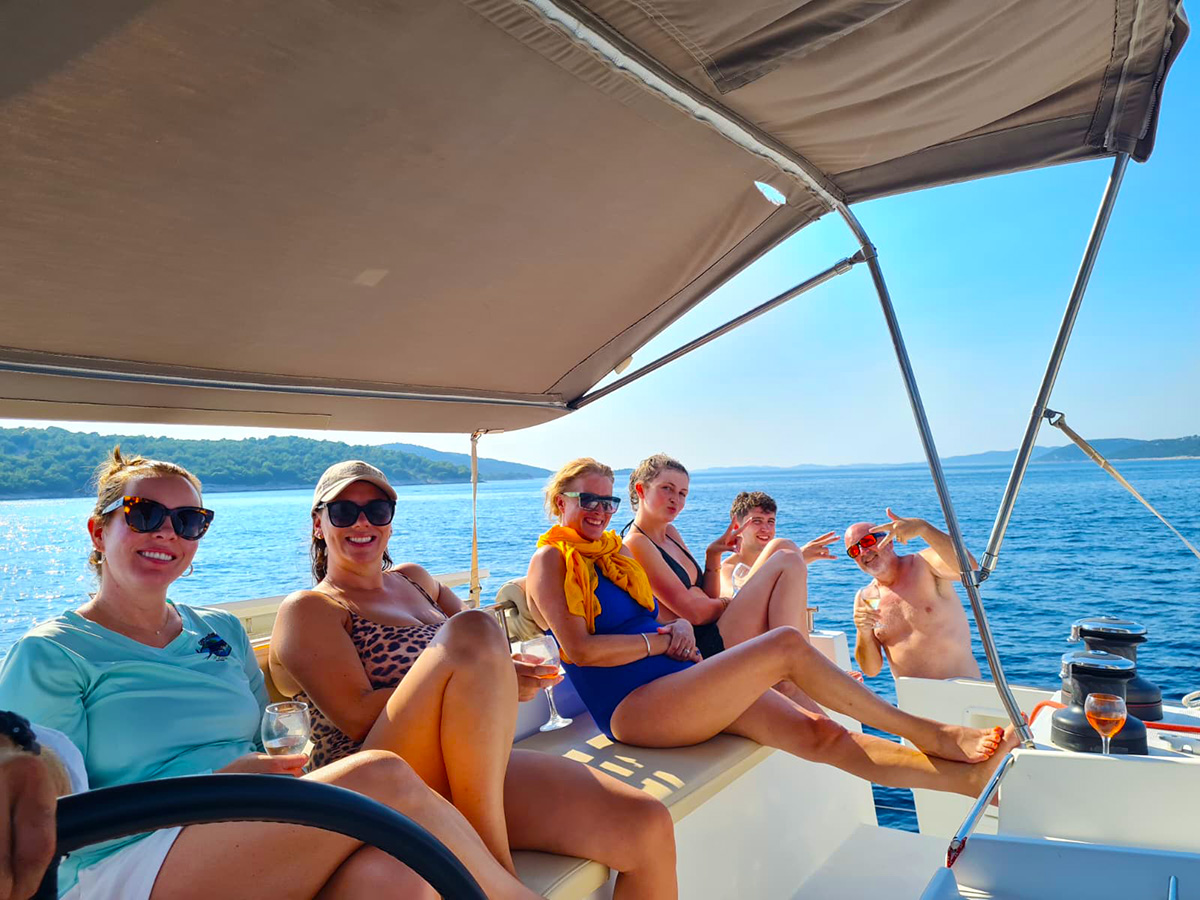
Krka is one of the best examples of how a Croatia sailing holiday can become much more than a coastal trip. By sailing to Skradin, guests do not only visit another marina. They reach a place where the Adriatic, the river, the national park, and inland Dalmatia meet.
This connection is what makes the experience so special. In one day, guests can sail through the Šibenik archipelago, enter the Krka canal, dock in Skradin, ride an e-bike through the national park area, and walk beside the waterfalls of Skradinski Buk.
For travellers who want a richer Croatia experience, this combination is hard to beat. It connects the sea with the river, activity with nature, and sailing with one of Croatia’s most famous national parks.
Explore Krka with Funky Tours
Funky Tours connects Krka National Park with two different experiences.
Our Croatia sailing tours include Skradin as one of the most memorable inland stops on the route, allowing guests to reach Krka by catamaran through the Šibenik region and Krka canal.
Our Krka e-bike experience starts directly from Skradin and gives guests the option to explore the park in an active, flexible, and carefully timed way. Guests can choose between a self-guided e-bike package focused on Skradinski Buk or a fully guided afternoon route including viewpoints, Roški Slap, Visovac Monastery viewpoint, and Skradinski Buk.
Together, these experiences show Krka from a different perspective: not only as a waterfall stop, but as a complete landscape where sailing, cycling, rivers, viewpoints, and national park nature come together.
👉 Explore our 4-day, 7-day and 8-day sailing holidays that include Krka National Park as part of the sailing itinerary.
Discover our all-inclusive Croatia sailing holidays aboard modern catamarans exploring the Adriatic islands. Each journey combines experienced crews, carefully designed routes, and small-group sailing for a relaxed and seamless experience.
Choose between our 4-day sailing odyssey or a 7-day island-hopping adventure across Croatia’s most beautiful coastal regions, including destinations of Skradin and Krka National Park.
All-inclusive cabin charter exploring Kornati & Krka National Park and the Šibenik islands.
⛵ Modern catamaran
👥 Small group sailing
🍽 Half-board included
🍷 Authentic Adriatic experiences
All-inclusive catamaran sailing exploring Kornati, Krka and the remote Adriatic island of Dugi Otok.
⛵ Modern catamaran
🌊 Island hopping
🍽 Half-board included
🍷 Authentic Adriatic experiences
All-inclusive private catamaran sailing across Croatia’s stunning islands and national parks.
⛵ Private catamaran
👨✈️ Skipper & host included
🧭 Flexible itinerary
📍 Custom Routes
Explore Croatia’s national parks through hiking, cycling and sailing in one seamless journey.
🥾 Hiking
🚴 Cycling
⛵ Catamaran sailing
🚐 Zagreb → Split Journey
When Is the Best Time to Visit Krka?
Krka National Park can be visited throughout the year, but the experience changes a lot depending on the season, weather, and time of day. The park is beautiful in every period, but the best time to visit depends on what kind of experience you want: waterfalls at their strongest, warm weather, fewer crowds, better cycling conditions, or a quieter walk around Skradinski Buk.
For most travellers, the best overall periods to visit Krka are spring, early summer, late summer, and autumn. These months usually offer a good balance between pleasant weather, green landscapes, active waterfalls, and more comfortable conditions for walking or cycling.
Spring: Green Landscapes and Strong Waterfalls
Spring is one of the most beautiful times to visit Krka National Park. The vegetation is fresh, the river is powerful, and the waterfalls often feel more dramatic than in the dry summer months.
This is a great period for travellers who enjoy nature, photography, walking trails, and e-bike routes. Temperatures are usually more comfortable than in peak summer, making spring especially good for active experiences such as cycling from Skradin, visiting viewpoints, or exploring Roški Slap.
Spring is also a good choice for visitors who want to avoid the busiest high-season crowds.
Summer: Warm Weather, Longer Days and More Visitors
Summer is the most popular time to visit Krka National Park. The weather is warm, days are long, and the park is included in many Croatia travel itineraries. For many visitors, especially those travelling along the coast, Krka becomes a natural day trip from Šibenik, Split, Zadar, or a sailing route through the Šibenik archipelago.
The main challenge in summer is crowding, especially around Skradinski Buk during late morning and early afternoon. This is why timing becomes very important. Visiting later in the day can make a big difference, especially if you want a calmer walk around the wooden trails and waterfall area.
For sailing guests arriving in Skradin in the afternoon, summer can actually work very well. Instead of joining the busiest daytime flow, they can visit Krka later, when many day visitors are already leaving.
Autumn: Calm Atmosphere and Comfortable Activity
Autumn is another excellent time to visit Krka National Park. The weather is often still pleasant, the landscapes become softer, and the park usually feels less crowded than in July and August.
For e-bike experiences, autumn can be one of the best periods of the year. Temperatures are more comfortable, the roads and viewpoints feel quieter, and the overall rhythm of the park becomes more relaxed.
If you prefer active travel, photography, local atmosphere, and a slower pace, autumn is one of the strongest choices.
Winter: Quiet Park and Limited Services
Winter offers the quietest version of Krka National Park. The waterfalls and river landscapes can still be very beautiful, and the lack of crowds gives the park a completely different atmosphere.
However, winter visits require more practical planning. Some services, boat connections, opening hours, and visitor facilities may be limited compared with the main season. For travellers who enjoy peaceful nature and do not need the full tourist infrastructure, winter can still be rewarding.
Best Time of Day: Why Afternoon Can Be Better
The time of day can be just as important as the season. Many visitors arrive at Krka during the busiest hours, usually from late morning to mid-afternoon. This is especially true in summer, when organized day trips and coastal visitors often reach Skradinski Buk around the same period.
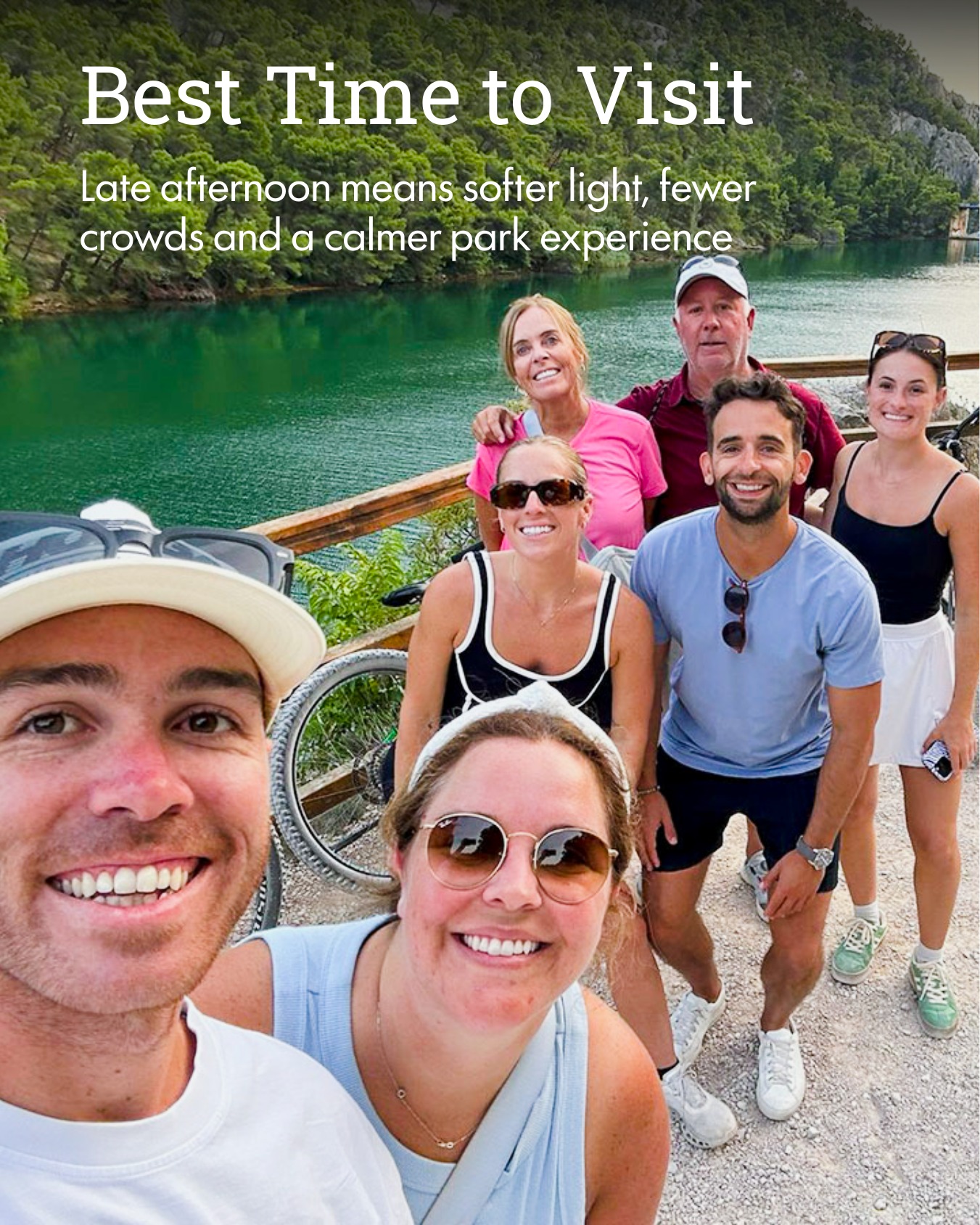
A late-afternoon visit offers a different experience. The temperature can be more comfortable, the light is softer, and many visitors have already started leaving the park. Around Skradinski Buk, this can make the walking trails, old mills, and waterfall views feel more peaceful and enjoyable.
This is one of the main reasons we designed our Krka e-bike experience around afternoon departures. Starting from Skradin by e-bike allows guests to enjoy the ride first and reach Skradinski Buk later in the day, when the park often feels calmer.
Best Time for E-Biking in Krka
For cycling and e-biking, the best conditions are usually in spring, early summer, late summer, and autumn. These periods offer a better balance between daylight, temperature, scenery, and comfort on the route.
In peak summer, e-biking is still a great option, but afternoon timing becomes especially important. Riding later in the day avoids the strongest heat and allows the experience to connect naturally with a quieter visit to Skradinski Buk.
For the fully guided route, which covers a longer distance and includes viewpoints, Roški Slap, Visovac Monastery viewpoint, and Skradinski Buk, the departure time should allow enough daylight and park access. For the self-guided option, the route is shorter and more flexible, making it easier to adjust the timing according to the season.
Best Time for Sailing Guests
For sailing guests, the best time to visit Krka often depends on the sailing itinerary. Many catamarans arrive in Skradin in the afternoon, after sailing through the Šibenik region and Krka canal.
This timing fits especially well with the late-day Krka experience. After docking, guests can continue inland by e-bike or visit Skradinski Buk when the park becomes quieter. Instead of treating the afternoon arrival as a limitation, it can become one of the strongest advantages of the visit.
In that sense, the best time to visit Krka is not always the earliest time. Sometimes, the best experience comes later in the day, when the crowds are smaller, the light is softer, and the park feels closer to its natural rhythm.
Can You Visit Krka Without the Crowds?
Krka National Park is one of the most popular natural attractions in Croatia, so it is normal to expect more visitors during the main travel season. This is especially true around Skradinski Buk, the most famous and most accessible part of the park.
However, the way you plan your visit can make a big difference. Krka does not have to feel like a rushed or overcrowded day trip. With better timing, a smarter starting point, and the right route, the experience can feel much calmer and more personal.
The key is to avoid visiting the busiest areas at the busiest time of day.
Avoid the Midday Rush
The busiest period in Krka National Park is usually from late morning to mid-afternoon, especially during June, July, August, and September. This is when many day trips, bus groups, private cars, and coastal visitors arrive at the park.
Skradinski Buk is the area that feels this the most. The wooden walking trails, viewpoints, old mills, and waterfall areas can become crowded during peak hours, which can make the visit feel less relaxed.
If you want a better experience, try to avoid planning your main Skradinski Buk visit in the middle of the day.
Visit Skradinski Buk Later in the Day
One of the best ways to enjoy Skradinski Buk with fewer people is to visit later in the afternoon. By that time, many day visitors are already leaving the park, the light becomes softer, and the walking trails often feel more comfortable.
This is especially useful in summer, when the combination of heat and crowds can affect the overall experience. A late-afternoon visit can feel slower, calmer, and more atmospheric.
This is also the main reason why our Krka e-bike experience from Skradin is built around afternoon departures. Instead of going directly to the busiest section of the park at peak time, guests can enjoy the ride first and reach Skradinski Buk later in the day.
Start from Skradin
Skradin is one of the best starting points for a more relaxed Krka visit. It gives you access to the lower part of the park, but it also allows you to combine the national park with the town, river scenery, e-bike routes, and sailing arrival.
For guests arriving by catamaran, Skradin is especially convenient. After docking in town, there is no need for extra transfers or complicated logistics. The visit to Krka can continue naturally from the marina, either towards Skradinski Buk or through a longer guided e-bike route into the wider Krka landscape.
Explore Beyond Skradinski Buk
Skradinski Buk is the most famous part of Krka National Park, and it is absolutely worth visiting. But it is not the only area of the park.
If you want to avoid the feeling that everyone is in the same place at the same time, consider including other parts of Krka in your visit. Roški Slap, Visovac Lake, viewpoints, inland roads, and upper park landscapes can offer a very different atmosphere.
This is one of the biggest advantages of the fully guided e-bike route from Skradin. Instead of focusing only on the lower waterfall section, the route includes viewpoints, Visovac Monastery viewpoint, Roški Slap, and finally Skradinski Buk. By the time guests reach the most famous area, the park is often quieter.
Choose an Active Route
Active travel is one of the best ways to experience Krka differently. When you move by e-bike, you are not only following the standard visitor flow. You are connecting different parts of the landscape, enjoying viewpoints, and approaching the park at a slower but more meaningful pace.
E-bikes make this especially practical because they allow guests to cover more distance without needing to be experienced cyclists. This creates a good balance between comfort and activity.
For travellers who want independence, the self-guided e-bike option offers a shorter and easier way to reach Skradinski Buk from Skradin. For travellers who want a fuller and more supported experience, the guided route gives access to more viewpoints and park areas.
Travel with Better Timing, Not More Speed
Avoiding crowds in Krka is not about rushing. It is about choosing the right rhythm.
Instead of trying to see everything as quickly as possible, the better approach is to plan your visit around timing, route, and flow. Start from a good location, avoid the busiest hours, include quieter areas if possible, and leave Skradinski Buk for the later part of the day.
This is how Krka becomes more than a crowded waterfall stop. It becomes a full landscape experience, with river views, cycling routes, viewpoints, old mills, waterfalls, and the peaceful atmosphere that makes the park so special.
Our Recommendation
For the best balance of scenery, activity, and crowd avoidance, we recommend an afternoon visit from Skradin.
The self-guided e-bike option is ideal for guests who want a simple, flexible ride to Skradinski Buk.
The fully guided e-bike route is best for guests who want to explore more of Krka, including viewpoints, Roški Slap, Visovac Monastery viewpoint, and Skradinski Buk later in the day.
For sailing guests arriving in Skradin by catamaran, this timing works especially well. What might look like a late arrival becomes a real advantage: you reach Krka when the park finally begins to slow down.
Tickets and Entrances for Krka National Park
Krka National Park has several entrances and access points, so the best choice depends on what you want to see and how you plan to visit. Many first-time visitors enter through Skradin or Lozovac because both are convenient for visiting Skradinski Buk, the most famous waterfall area of the park.
If your main goal is to visit Skradinski Buk, Skradin is one of the most scenic and practical starting points. It connects the experience with the Krka River, the town itself, the marina, cycling routes, and the classic lower section of the national park.
Lozovac is also a popular entrance, especially for visitors arriving by car or organized tour. It is practical and direct, but it does not offer the same riverside town atmosphere as Skradin.
For visitors interested in the upper parts of Krka National Park, areas such as Roški Slap, Laškovica, Burnum, Puljane, and Krka Monastery open a different side of the park. These areas are ideal for travellers who want to go beyond the classic Skradinski Buk visit and discover more of the river, viewpoints, history, and inland landscapes.
Ticket Prices and Seasonal Differences
Krka National Park ticket prices vary depending on the season, visitor category, selected entrance area, and time of day. Prices are usually higher during the summer months and lower in the shoulder and winter seasons.
In some periods, afternoon entrance tickets may be more affordable than regular daytime tickets. This is another reason why visiting Krka later in the day can be a smart choice, especially during the busy summer season.
For organized groups, group ticket rates may be available, but they usually require a minimum number of visitors and prior announcement to the national park. Because prices and conditions can change, visitors should always check the official Krka National Park price list before planning their visit.
Practical Tips Before Visiting
Before visiting Krka National Park, it is useful to check the official opening hours, ticket conditions, boat and bus transfer schedules, and seasonal access rules. Some services operate only during certain months, while opening hours can vary between summer, shoulder season, and winter.
Comfortable walking shoes are strongly recommended, especially for Skradinski Buk, where wooden trails, bridges, and natural surfaces are part of the experience. During summer, sun protection and water are important, while in spring and autumn a light jacket can be useful, especially for late-afternoon visits.
If you plan to explore Krka by e-bike, check the route, distance, daylight, and support options before departure. The shorter self-guided route from Skradin is easier and focused mainly on Skradinski Buk, while the fully guided route covers more distance and includes viewpoints, Roški Slap, Visovac Monastery viewpoint, and the lower part of the park.
How to Plan Your Visit to Krka
There is no single best way to visit Krka National Park. The right plan depends on how much time you have, where you start, your activity level, and whether you want a classic waterfall visit or a wider experience of the park.
Here are a few simple ways to plan your visit.
Classic Half-Day Krka Visit
This option is best for first-time visitors who want to see the most famous part of the national park without adding too many extra activities.
Start in Skradin or Lozovac and focus on Skradinski Buk. Walk the wooden trails, visit the old mills, enjoy the waterfall views, and allow enough time to experience the lower section of the park without rushing.
This is the easiest Krka plan and a good choice for travellers with limited time.
Best for: first-time visitors, families, easy sightseeing, classic Krka experience.
Easy Self-Guided E-Bike Visit from Skradin
This option is ideal for travellers who want to add light activity to their Krka visit without joining a long guided route.
Start in Skradin, collect your e-bike, receive a short route briefing, and ride towards the Skradinski Buk entrance. After reaching the park, continue with the walking trail through the lower section of Krka National Park, including wooden paths, old mills, water channels, and the famous waterfall area.
This is a flexible and easier option, especially suitable for guests who want independence and a slower pace.
Best for: independent travellers, couples, active beginners, sailing guests with limited time.
Fully Guided E-Bike Experience
This is the best option for travellers who want to see more of Krka National Park and the surrounding landscape.
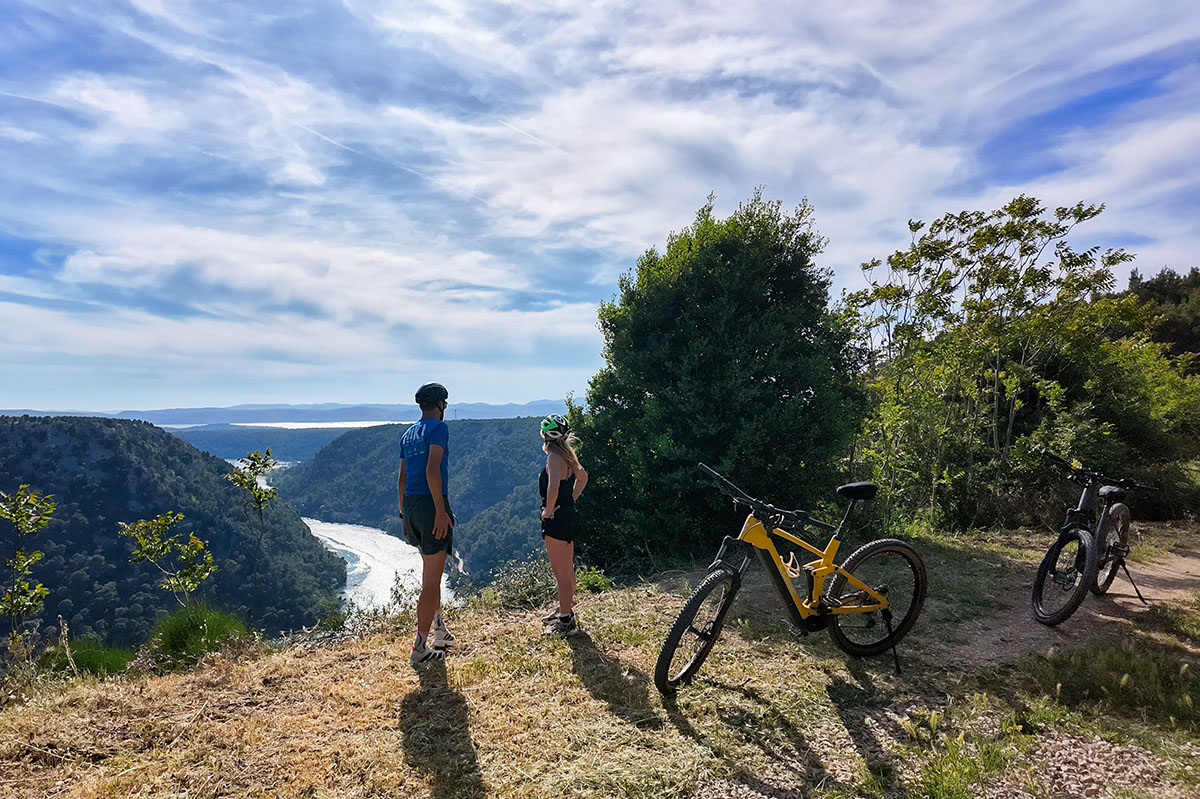
The guided route starts in Skradin and follows a longer e-bike route through the wider Krka area. Highlights include views over the Krka canal and Skradin, Visovac Lake and monastery viewpoint, Rogovo viewpoint, Roški Slap, and finally Skradinski Buk.
This option gives a better sense of the full park because it combines cycling, viewpoints, upper park landscapes, and the famous lower waterfall section.
Best for: active travellers, nature lovers, guests who want support, travellers who want more than Skradinski Buk.
Sailing Guest Afternoon Plan
For sailing guests arriving in Skradin by catamaran, Krka can be experienced in a very natural and memorable way.
After sailing through the Šibenik region and the Krka canal, guests dock in Skradin and continue inland by e-bike or with a classic park visit. The afternoon timing can be a major advantage because many day visitors are already leaving the park.
This plan works especially well for guests who want to connect sailing, cycling, river landscapes, and waterfalls in one day.
Best for: Croatia sailing guests, catamaran travellers, guests arriving in Skradin in the afternoon.
Our Way of Experiencing Krka National Park
At Funky Tours, we see Krka National Park as more than a short waterfall stop. For us, Krka is one of the most interesting places in Dalmatia because it connects several different travel experiences in one landscape: sailing, river scenery, e-biking, waterfalls, viewpoints, local towns, and inland nature.
This is why we include Krka in two different but connected ways.
Krka as Part of Our Croatia Sailing Routes
On our Croatia sailing itineraries, Skradin is one of the most special stops. Guests reach the area by sailing through the Šibenik archipelago and the Krka canal before docking in Skradin.
This approach gives Krka a completely different feeling. Instead of arriving by road, the journey moves naturally from sea to river, from islands to inland Dalmatia, and from the catamaran to one of Croatia’s most famous national parks.
For many guests, this is one of the most memorable contrasts of the sailing route.
Krka by E-Bike from Skradin
For travellers who want to explore Krka more actively, our e-bike experience starts directly from Skradin.
Guests can choose between two options. The self-guided e-bike package is shorter, easier, and focused mainly on Skradinski Buk. It includes an e-bike, Krka National Park entrance ticket, route briefing, and support in case of bike-related issues.
The fully guided afternoon e-bike tour is a longer and richer experience. It includes a bike guide, road support, viewpoints, Roški Slap, Visovac Monastery viewpoint, and Skradinski Buk.
Both options are designed around the same idea: to make Krka easier, more active, and better timed from Skradin.
Better Timing, Better Experience
One of the most important parts of our Krka approach is timing. Instead of visiting the busiest areas of the park during peak hours, we prefer to plan the experience in a way that feels calmer and more natural.
For our sailing guests, afternoon arrival in Skradin becomes an advantage. For independent travellers, an afternoon e-bike departure can also be a smart way to enjoy Krka with fewer crowds, softer light, and a more relaxed atmosphere.
Our goal is simple: to help guests experience Krka at the right pace, not only at the most obvious time.
Skradin is often described as the gateway to Krka National Park, but the town deserves time of its own. Set where the Krka River meets the rhythm of the Adriatic, Skradin combines a peaceful waterfront, marina life, stone streets, local food, wine culture, and scenic viewpoints in a way that feels slower and more intimate than many busier coastal towns.
A good visit can begin with a walk through the old town, where narrow lanes, small squares, churches, and traditional stone houses create a classic Dalmatian atmosphere. From there, continue towards the waterfront and ACI Marina Skradin, one of the most picturesque marina settings in Croatia, positioned directly where the river landscape and town meet. ACI describes Skradin as a harbour where “the river kisses the sea,” which captures the feeling of the place well.
For the best view over Skradin, walk up to Turina Fortress, the medieval fortification above the town. The fortress was built on the remains of a prehistoric hill-fort and is connected with the rule of Vice-Roy Pavao Šubić I in the late 13th and early 14th century. From the hill, you get a beautiful view over Skradin, the marina, the Krka River, and the surrounding landscape.
Skradin is also a strong destination for food and wine. The area around the town is known for small wineries and local Dalmatian flavours, making it a great place to slow down after sailing, biking, or sightseeing. BIBICh Winery is one of the best-known names in the region, offering wine tastings and food experiences based on local ingredients and Croatian winemaking traditions. Another excellent local name is Sladić Winery in nearby Plastovo, a family winery focused on indigenous varieties and the terroir of the Skradin wine area.
For visitors not entering Krka National Park, Skradin can still easily fill a relaxed half-day: walk the old town, visit the marina, climb to Turina Fortress, enjoy coffee or lunch by the water, and consider a local wine tasting in the surrounding countryside. For sailing guests, this is what makes Skradin such a special stop. It feels different from the island towns, quieter, greener, and more connected to the river, wine, and inland side of Dalmatia.
Can you visit Krka National Park from Skradin?
Yes. Skradin is one of the most popular and scenic gateways to Krka National Park, especially for visiting Skradinski Buk. It is also ideal for travellers who want to combine the park with a visit to Skradin town, the Krka River, e-bike routes, or sailing arrival.
Is Skradin the best entrance for Krka National Park?
Skradin is one of the best entrances if you want a scenic and relaxed approach to Skradinski Buk. Lozovac is also practical, especially for visitors arriving by car or bus. Skradin is especially attractive for travellers staying near the river, arriving by boat, or starting an e-bike experience.
What is the most famous attraction in Krka National Park?
The most famous attraction is Skradinski Buk, the lower waterfall area known for wooden walking trails, old mills, water channels, and beautiful cascades.
What is the difference between Skradinski Buk and Roški Slap?
Skradinski Buk is the most famous and most visited waterfall area of Krka National Park. Roški Slap is located in the upper section of the park and usually feels quieter and more spacious. Both are beautiful, but they offer different atmospheres.
Can you bike in Krka National Park?
Yes, the wider Krka area is excellent for cycling and e-bike experiences. Routes can include Skradin, viewpoints, Roški Slap, Visovac Lake, and Skradinski Buk, depending on the selected route and level of activity.
Is an e-bike a good way to explore Krka?
Yes. E-bikes are a very good option because the Krka area includes longer distances, climbs, viewpoints, and local roads. With an e-bike, guests can cover more ground with less effort and enjoy a more active but comfortable experience.
What is the best time of day to visit Skradinski Buk?
Late afternoon can be one of the best times to visit Skradinski Buk, especially during the summer season. Many day visitors leave later in the day, so the walking trails and waterfall area can feel calmer and more atmospheric.
Can you visit Krka after arriving by sailboat or catamaran?
Yes. Sailing guests can dock in Skradin and continue towards Krka National Park from there. This is one of the most unique ways to experience the park because the journey connects the Adriatic Sea, Krka canal, Skradin town, and the national park.
How much time do you need for Krka National Park?
For a simple visit to Skradinski Buk, a few hours may be enough. For a fuller experience including viewpoints, Roški Slap, Visovac Lake, cycling routes, or sailing arrival, you should plan at least half a day or more.
Can you swim in Krka National Park?
Swimming rules in Krka National Park have changed over the years and can depend on official park regulations. Visitors should always check the latest rules before planning any swimming activity. Swimming in the area around Skradinski Buk is not possible, while swimming in the upper parts of Krka National Park is possible.
Is Krka National Park suitable for families?
Yes. Krka is suitable for families, especially the Skradinski Buk area with its walking trails and accessible scenery. For e-bike experiences, suitability depends on children’s age, height, cycling ability, and available bike sizes.
What should I bring when visiting Krka?
Comfortable walking shoes, water, sun protection, sunglasses, a charged phone, and weather-appropriate clothing are recommended. For e-bike experiences, closed shoes and comfortable cycling clothes are especially important.