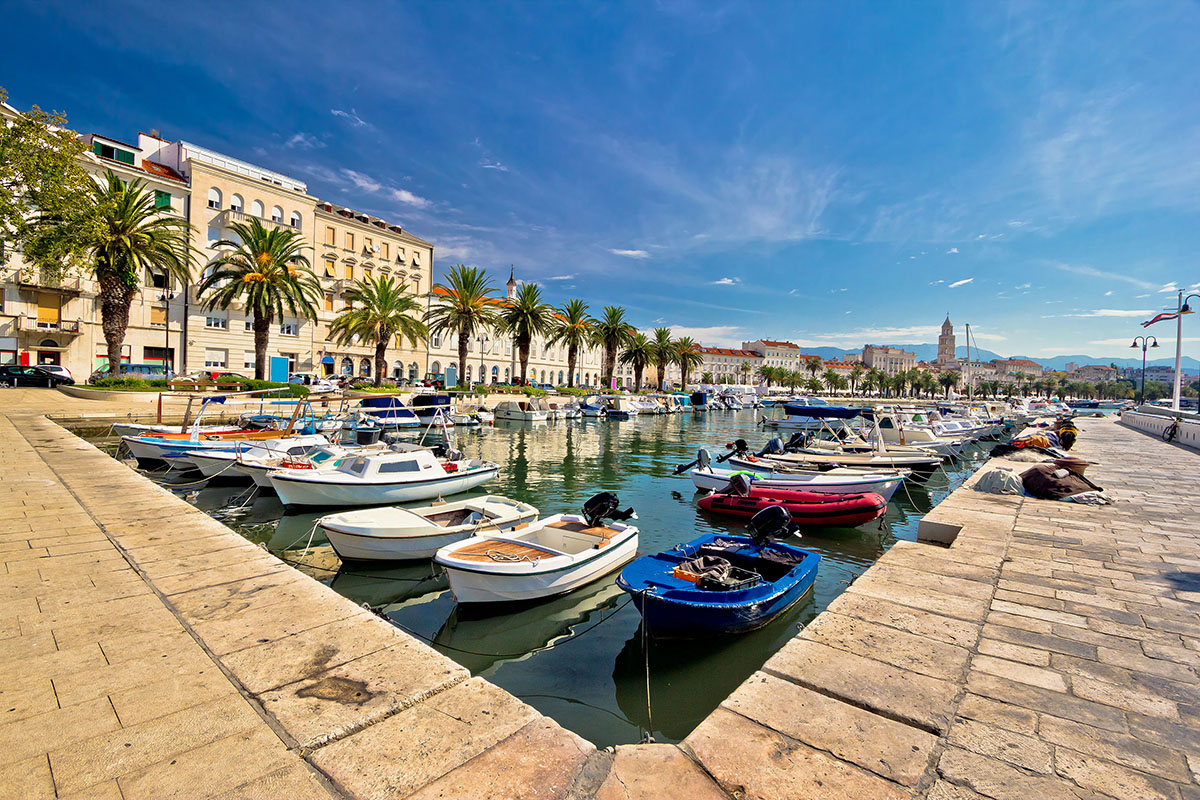
With new direct flights connecting Split not only to Newark (USA) but to major European hubs such as London, Amsterdam, Frankfurt and Paris, Croatia’s Dalmatian coast has never been more accessible. For many travelers, Split is the perfect Mediterranean city break – Roman architecture woven into daily life, café culture along the Riva, and the monumental walls of Diocletian’s Palace rising from the old town.
But if you only experience Split from land, you are only seeing half of the story.
Split was not built despite the Adriatic. It was built because of it.
The sea determined its position, protected its harbor, shaped its trade routes and connected it to the islands that supplied it with stone, wine, olive oil and fish. Long before modern tourism defined the coastline, the Adriatic defined Split. It was a maritime crossroads, a connector between islands and mainland, a city whose rhythm depended on wind, tide and exchange.
Seen only from its streets, Split feels historic, but seen from the water, it makes the story complete.
The Adriatic is not a backdrop to the city. It is its framework. And the most natural way to understand that connection is by sailing from Split – not as a day trip, but as a continuation of the city’s identity.
👉 Read our Split guide: Split Unique Discoveries
Split is often presented as a historic destination. Diocletian’s Palace anchors the old town. Venetian influence shapes the architecture. The Riva defines social life.
Yet Split was never meant to function as an isolated city.
When the Roman Emperor Diocletian chose this location for his palace in the 4th century, he chose it for its protected harbor and strategic position along Adriatic trade routes. The palace was not built in a vacuum. It was built facing the sea.
For centuries, ships moved between Split and the surrounding islands carrying stone from Brač, wine from Hvar, olives from Šolta, and fish from Vis. During the Venetian Republic, Split grew as a maritime trading post linking the eastern Adriatic to the wider Mediterranean. Even migration patterns across Dalmatia followed sea corridors more than inland roads.
Dalmatia was shaped by maritime exchange long before it was shaped by tourism.
The islands of Central Dalmatia were never separate from Split. They functioned as part of a connected maritime ecosystem. Agriculture inland supported coastal towns. Harbors connected villages. Wind patterns determined timing.
When you explore the region only through short excursions or speedboat day trips, that ecosystem becomes fragmented. You visit highlights. You take photos. You return.
The structure remains invisible.
Sailing in Croatia changes that structure entirely.
Croatia’s islands are famous for a reason. The Blue Cave. Hvar. Zlatni Rat. Vis. They are genuinely beautiful.
But beauty alone does not create depth.
Most day trips from Split follow the same rhythm. Boats leave late in the morning. They reach popular spots around midday. Guests have limited time to swim, take photos and move on. By late afternoon, everyone heads back toward the mainland.
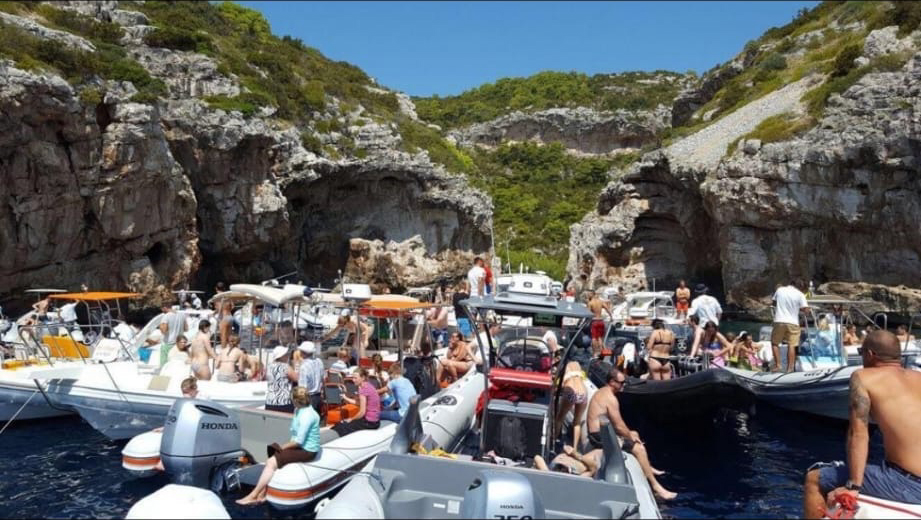
By noon, the most photographed coves are full of speedboats. Harbors feel crowded. Anchorages that are magical at sunrise feel busy and loud in the middle of the day.
The issue is not the islands themselves. It is the timing.
Day trips compress geography into a schedule. You move quickly between highlights, but rarely stay long enough to feel the place.
Sailing changes that rhythm completely.
When you arrive in the late afternoon instead of midday, the atmosphere shifts. When you anchor overnight, you experience the harbor after excursion boats leave. When you travel at wind pace rather than engine pace, the coastline feels connected rather than curated.
Nothing about the destination changes.
But everything about the experience does.
Do you really want to visit Stiniva cove in the crowd of speedboats like this (photo under)?
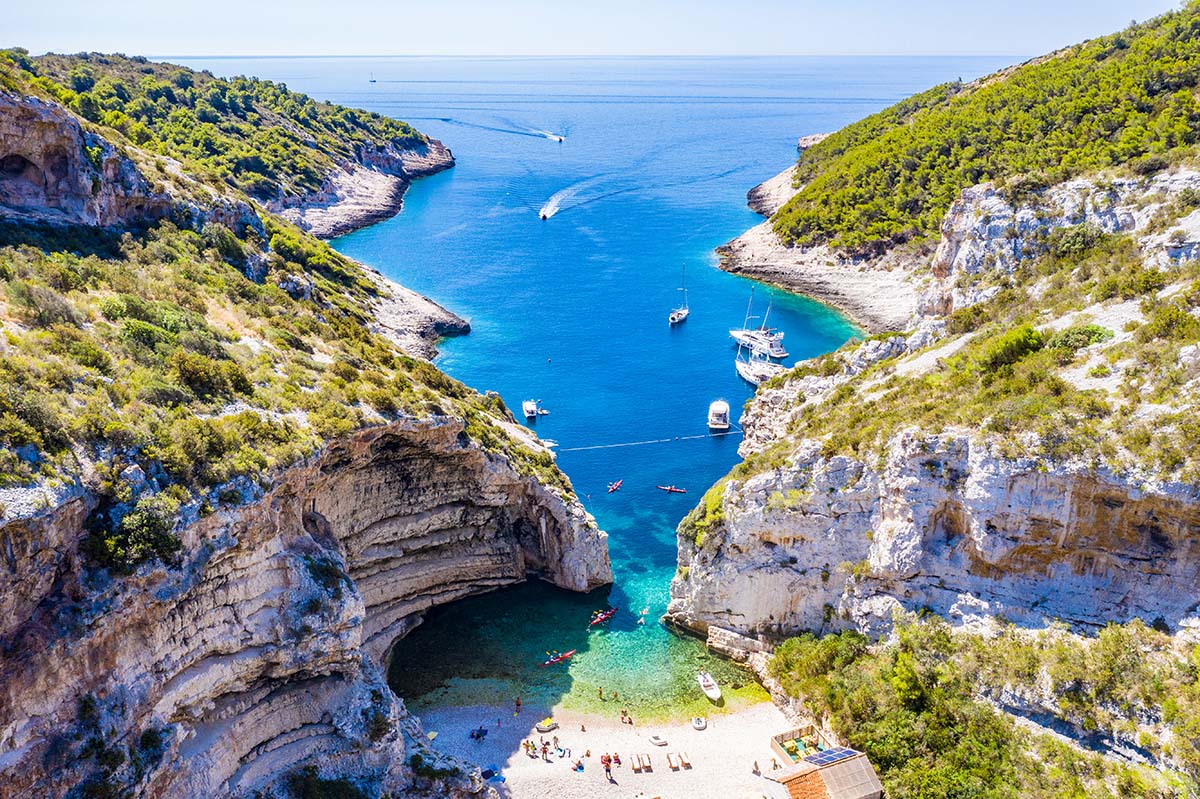
And a photo of Stiniva bay (under) when you make smart planning.
The first day sets the tone for the entire journey.
Instead of racing toward the most famous islands, a thoughtfully designed sailing route from Split begins just nine nautical miles away, on Šolta. The short crossing matters. Within an hour, Split’s skyline fades and the rhythm changes. The sea becomes open space rather than scenery.
Šolta is not dramatic. And that is precisely the point.
There are no headline beach clubs or party reputations here. What defines the island are olive groves, quiet anchorages and fishing villages that still function according to local rhythm.
A protected inlet like Šešula Bay offers the kind of first swim most visitors never experience – clear water, pine forest shade, and no road access. You arrive by boat, not by schedule.
Alternatively docking in Stomorska reveals another layer. Stone houses descend toward the harbor. Fishing boats sit tied along the quay. The evening promenade feels residential rather than curated. Dinner is simple and seasonal – grilled fish, island olive oil, house wine poured without ceremony.
👉 Explore our catamaran fleet or compare Lagoon catamaran models.

For those curious to explore inland, the village of Grohote offers a glimpse into the agricultural core of the island. Olive groves surround stone homes, and small producers continue pressing oil in family quantities. An agrotourism estate in nearby Gornje Selo pairs local wine with vineyard views rather than marina backdrops.
If time allows, a short hike toward Vela Straža, the island’s highest point, shifts perspective completely. From above, you see Split across the channel and understand how closely connected city and island truly are.
Starting the journey in Šolta recalibrates perception.
Here, the Adriatic feels lived in. It is agricultural, maritime and continuous – not curated, not rushed, not performing for visitors.
Šolta does not try to impress you.
It quietly prepares you for everything that follows.
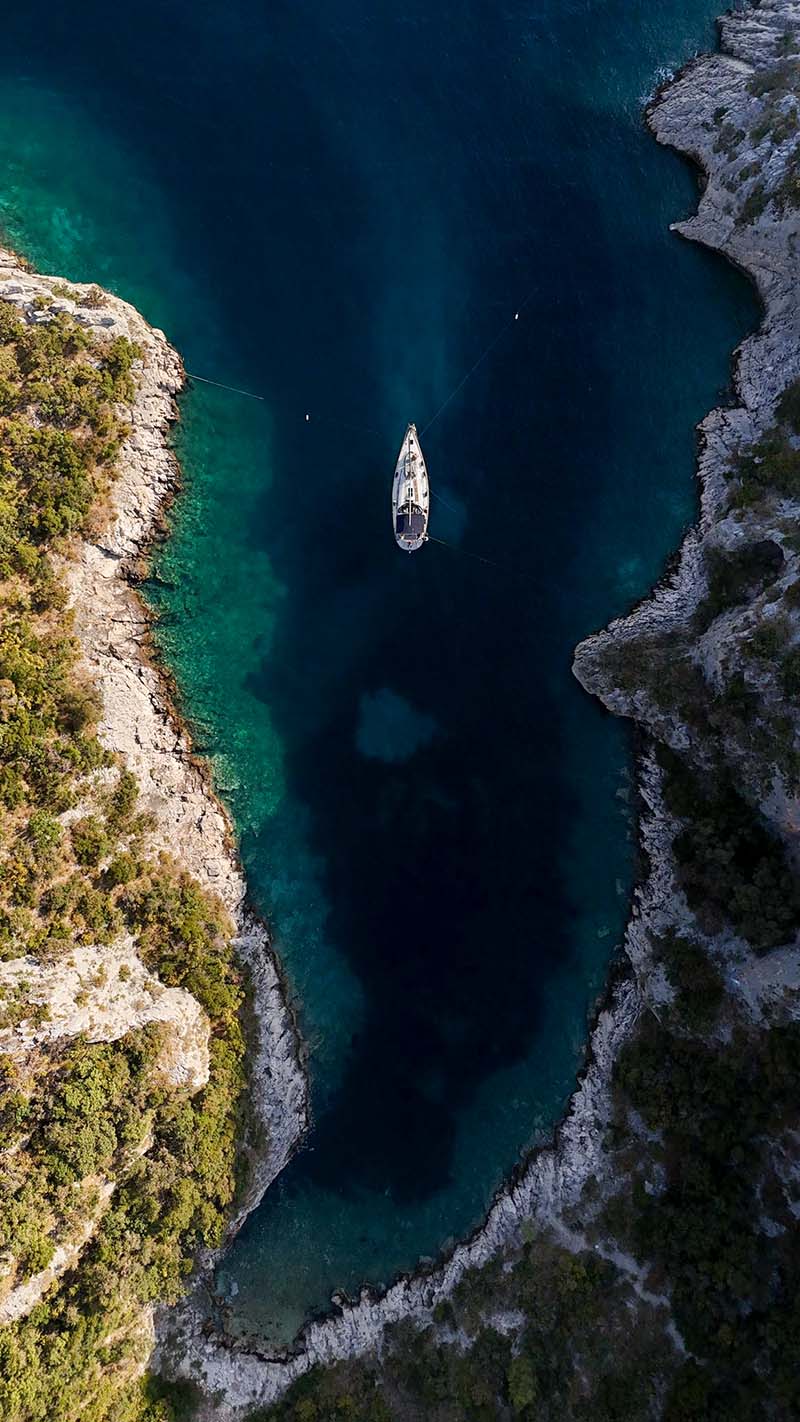
The sail from Šolta to Vis is long enough to feel intentional.
Vis sits further out in open water, and that distance shaped its identity. For decades it was closed to foreign visitors, functioning as a Yugoslav military base until 1989. While other islands developed tourism infrastructure earlier, Vis remained strategically isolated. That isolation preserved it.
Arriving in the late afternoon rather than midday changes the atmosphere completely. The harbor feels settled. Light softens against limestone façades. Fishing boats sit low in the water along the quay.
Docking in Vis Town reveals classical layers – remnants of the ancient Greek colony of Issa, founded in 397 BC, still anchor the island’s story. Narrow streets lead to small wine bars and waterfront restaurants where the pace is unhurried.
On the western side, Komiža feels even more rooted. It remains a working fishing town. Nets are repaired along the harbor. Boats head out at dawn. Dinner often reflects the morning’s catch rather than a menu designed for volume tourism.
But the real depth of Vis lies inland.
👉 Read more: What Most Travelers Don’t Know Before Booking a Sailing Holiday in Croatia

Beyond the coastline, small villages such as Podšpilje and Žena Glava sit quietly among vineyards and olive groves. The fertile Vis field continues to produce indigenous varieties such as Vugava, cultivated here for generations. Agriculture is not decorative here. It is functional.
Family-run konobas in the interior offer a different rhythm from waterfront dining. Slow-cooked dishes prepared under iron bells, local vegetables, house wine poured directly by the owner – meals that feel connected to land rather than location.
Vis also invites exploration beyond the harbor.
Hiking routes climb above Komiža toward old chapels with panoramic views across the open Adriatic. Trails lead to former military lookouts carved into hillsides. From elevated ridges, you begin to understand why the island was once strategically significant.
For those who prefer two wheels, the island’s network of quiet roads and gravel paths makes it ideal for cycling or e-biking. Riding through the inland agricultural plain reveals a side of Vis most day visitors never encounter.
Swim stops along the coast feel raw and elemental. Approaching a cove like Stiniva outside peak hours transforms it entirely. In the quiet morning or late afternoon light, it feels like a natural amphitheater of stone and sea rather than a photo queue.
Vis introduces seriousness to the journey.
It shifts the Adriatic from picturesque to layered. From postcard to place.
After Vis, the sea no longer feels like scenery. It feels historical.
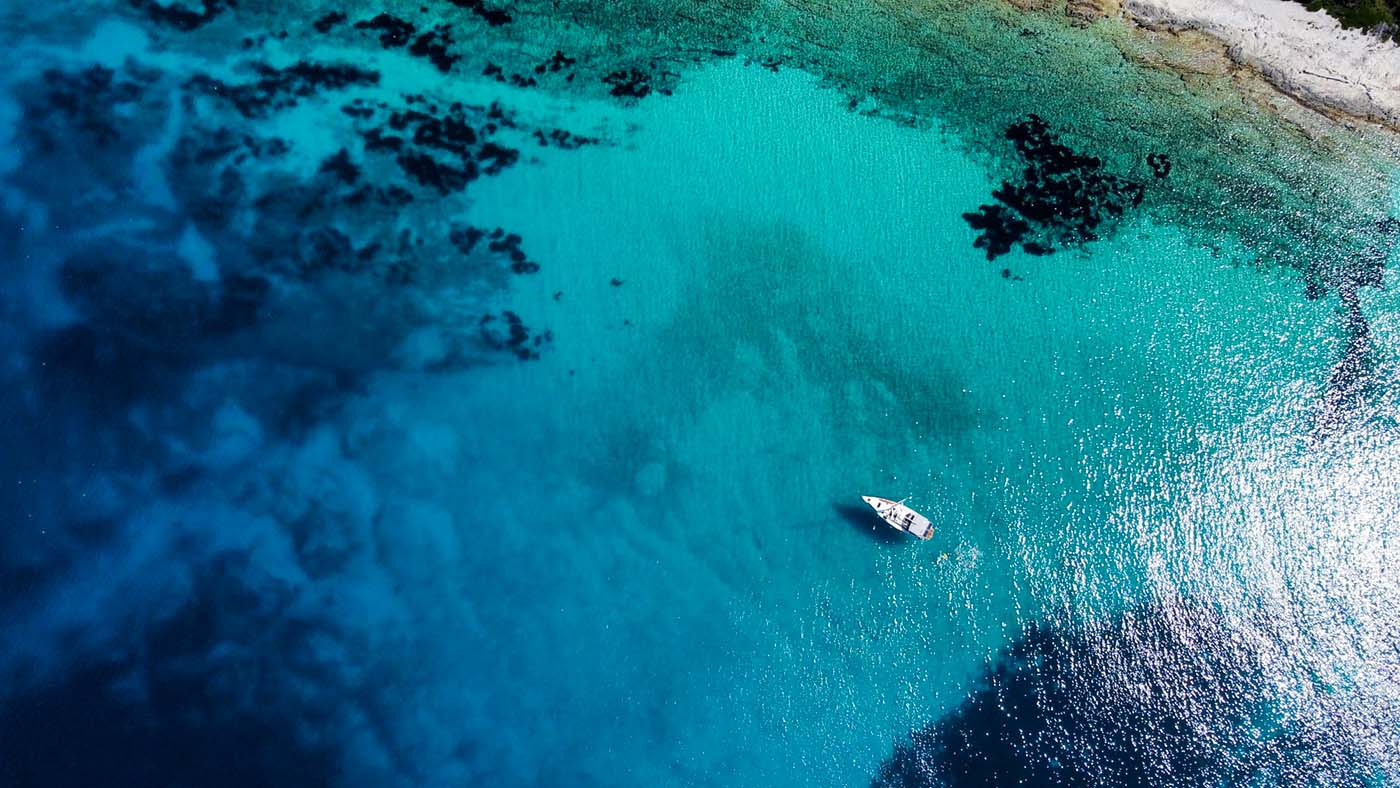
After the layered experience of Vis, the journey shifts again.
Before sailing south toward Šćedro, there is one experience many travelers ask about: the Blue Cave on the small island of Biševo.
The way you approach it makes all the difference.
Rather than visiting as part of a long day tour departing from Split, the most recommended way to explore the Blue Cave is from Vis itself – either from Komiža or Vis Town – with an early morning local boat.
Local skippers depart before the main wave of speedboats arrives from Split and Hvar. Boats operating from Vis also have priority access at the cave entrance, which significantly reduces waiting time during peak season.
The result is not just efficiency. It is atmosphere.
Arriving early, when the sea is still calm and the light is clean, transforms the experience. The cave feels luminous rather than rushed. The water glows quietly instead of echoing with engines. It becomes an encounter with natural phenomenon rather than a timed stop.
After returning to Vis, the sail toward Šćedro introduces contrast.

Šćedro is smaller, less inhabited and intentionally minimal. There are no headline attractions here. No nightlife narrative. No structured marina scene.
Instead, protected bays like Mostir offer calm anchorage surrounded by pine forest and dry-stone landscape. Boats sit scattered rather than packed. The rhythm slows naturally.
A short walk across the island leads to undeveloped beaches where effort filters experience (such as the Porterusha beach). Dining is simple – in a small, family-run konoba overlooking the bay, serving freshly caught fish and seasonal dishes without a presentation theater.
Šćedro functions as a hinge in the itinerary.
It is here that you begin to feel distance not in nautical miles, but in pace.
The Adriatic is no longer something you are chasing.
It becomes something you are inhabiting.
👉 Read more: Sailing Hvar’s Secrets: Jelsa, Paklinski Islands & Šćedro
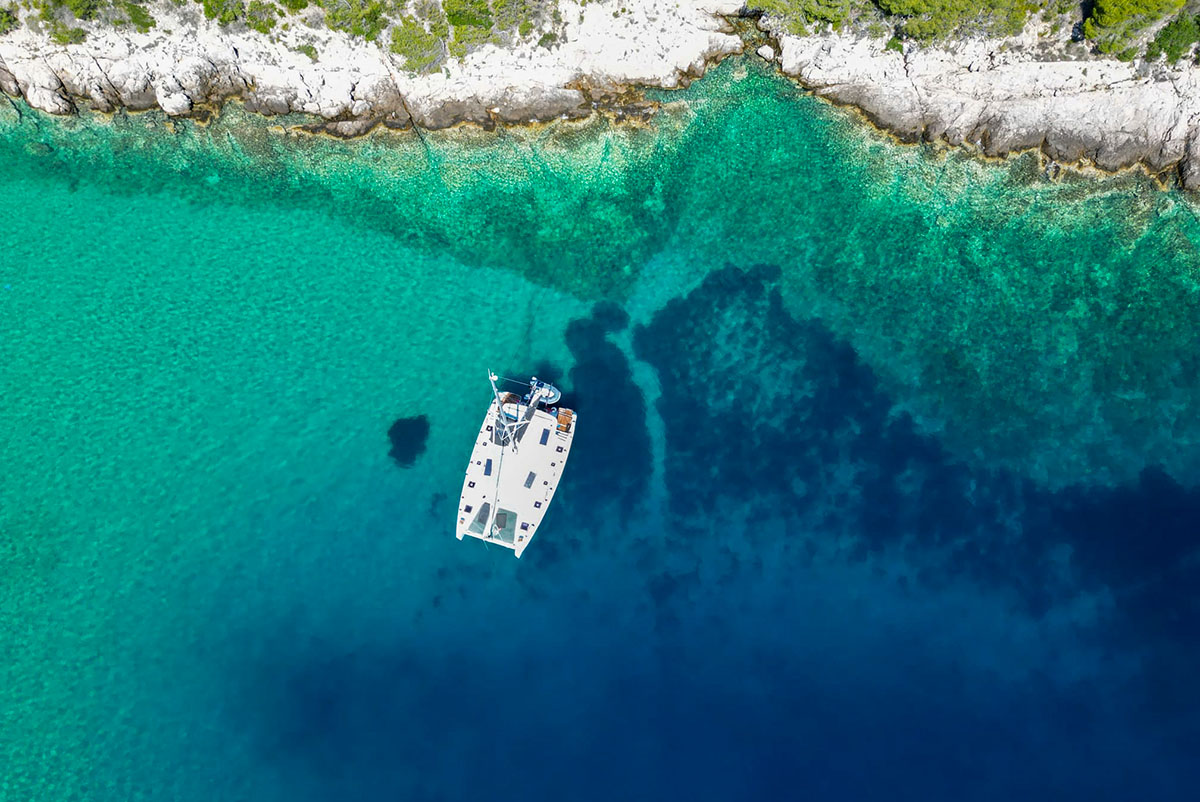
After the stillness of Šćedro, Hvar reintroduces movement and vivid energy.
Rather than docking directly in Hvar Town’s busy marina, a more thoughtful approach is to anchor in the Pakleni Islands just offshore. The Pakleni archipelago offers protected bays, clear water, and a completely different atmosphere from the main harbor.
From here, a short water taxi ride brings you into Hvar Town for the evening.
This small adjustment changes everything.
You can explore the historic streets, climb to Fortica Fortress for sunset, enjoy dinner in town, experience the island’s social energy – and then return to a quiet anchorage rather than sleeping in the middle of marina traffic.
Hvar Town becomes something you visit, not something that absorbs you.
👉 Read the full guide: Hvar Town Guide: Our Favourite Things to See, Eat & Experience
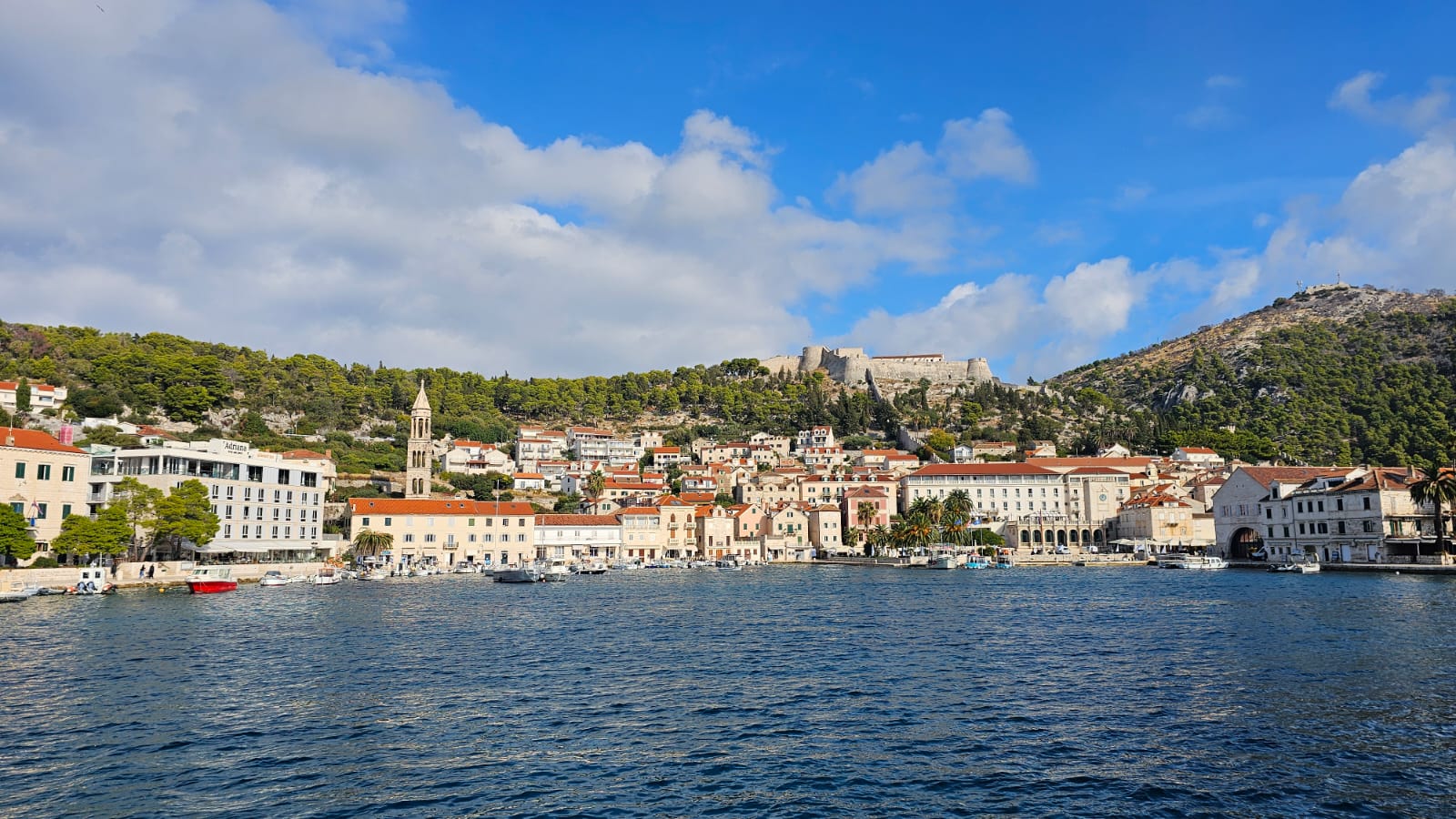
The following day, the journey shifts north toward Stari Grad, and the tone changes entirely.
Founded in 384 BC, Stari Grad is one of the oldest continuously inhabited towns in Europe. Its harbor feels residential and balanced. Evenings are slower, quieter, more local.
Just beyond the town lies the UNESCO-protected Stari Grad Plain, where the ancient Greek agricultural grid is still visible. Vineyards, olive groves and dry-stone walls define the landscape.
Cycling through the plain offers one of the most immersive ways to experience Hvar. The terrain is gentle, the roads are quiet, and the island’s agricultural continuity becomes tangible rather than theoretical.
Nearby inland villages such as Vrboska and Jelsa add further dimension. Small harbors, family-run wineries and stone houses reflect a different Hvar – one rooted in land and tradition.

Wine tastings in Jelsa or Svirče feel intimate and unpolished. Producers often host guests personally, pouring Plavac Mali grown on nearby slopes. On the southern side of the island, around Sveta Nedjelja, vineyards cling dramatically above the sea.
For those who want elevation, hiking toward the island’s highest peak, Sv. Nikola, reveals panoramic views across the channel toward Brač and Vis. From above, the maritime system becomes visible again.
Hvar works in this itinerary because it reveals contrast.
Nightlife exists. But so do ancient fields.
Beach clubs exist. But so do donkey farms and inland konobas.
Yachts arrive daily. But agriculture continues uninterrupted.
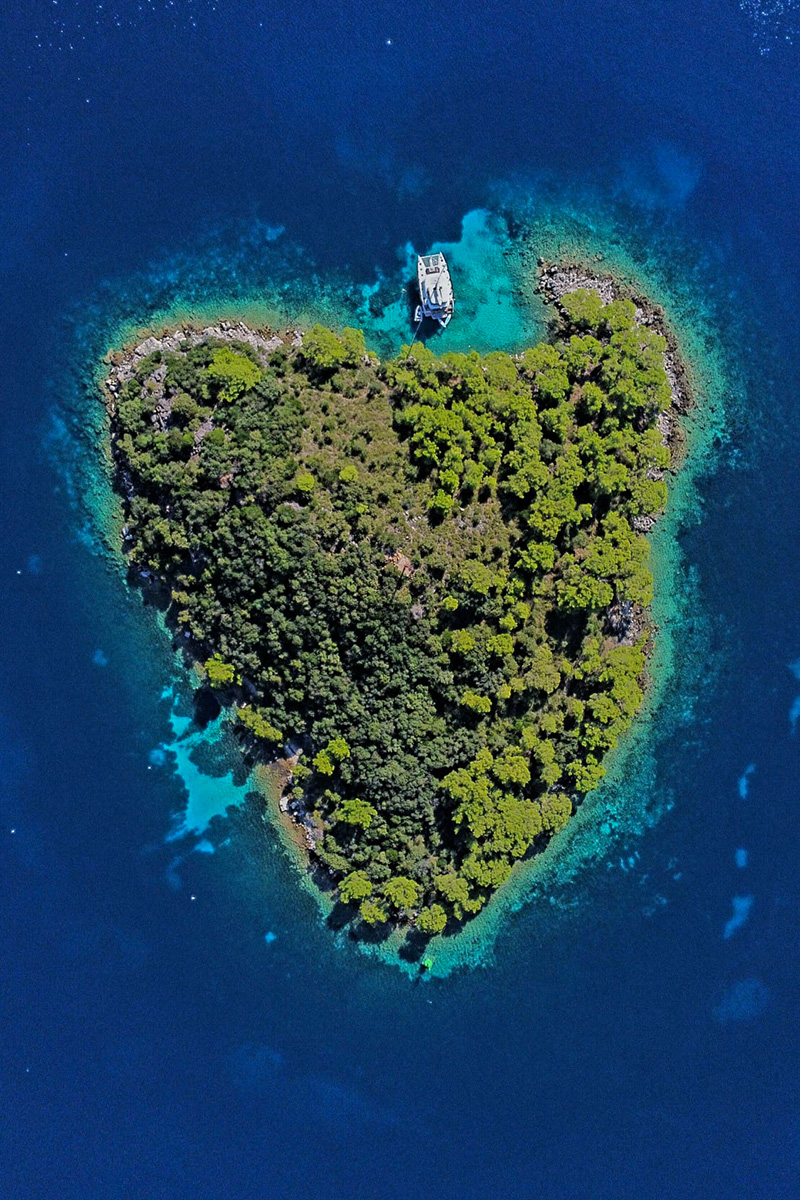
The sail from Hvar to Brač is visually striking. As you cross the channel, the island rises in pale limestone and sharper contours. Brač feels different immediately – more solid, more physical, less theatrical.
If Hvar represents cultivated elegance, Brač represents material reality.
Many travelers associate Brač with Zlatni Rat near Bol, one of the most photographed beaches in Croatia. From the sea in the early morning or late afternoon, it feels sculptural and elemental. But Zlatni Rat is only one layer of the island.
Brač’s deeper identity lies in stone.
The island’s white limestone has shaped architecture across Dalmatia for centuries. In the village of Pučišća, the tradition continues through a working stonemasonry school where the craft is still taught professionally. This is not a decorative story. It is a living one.
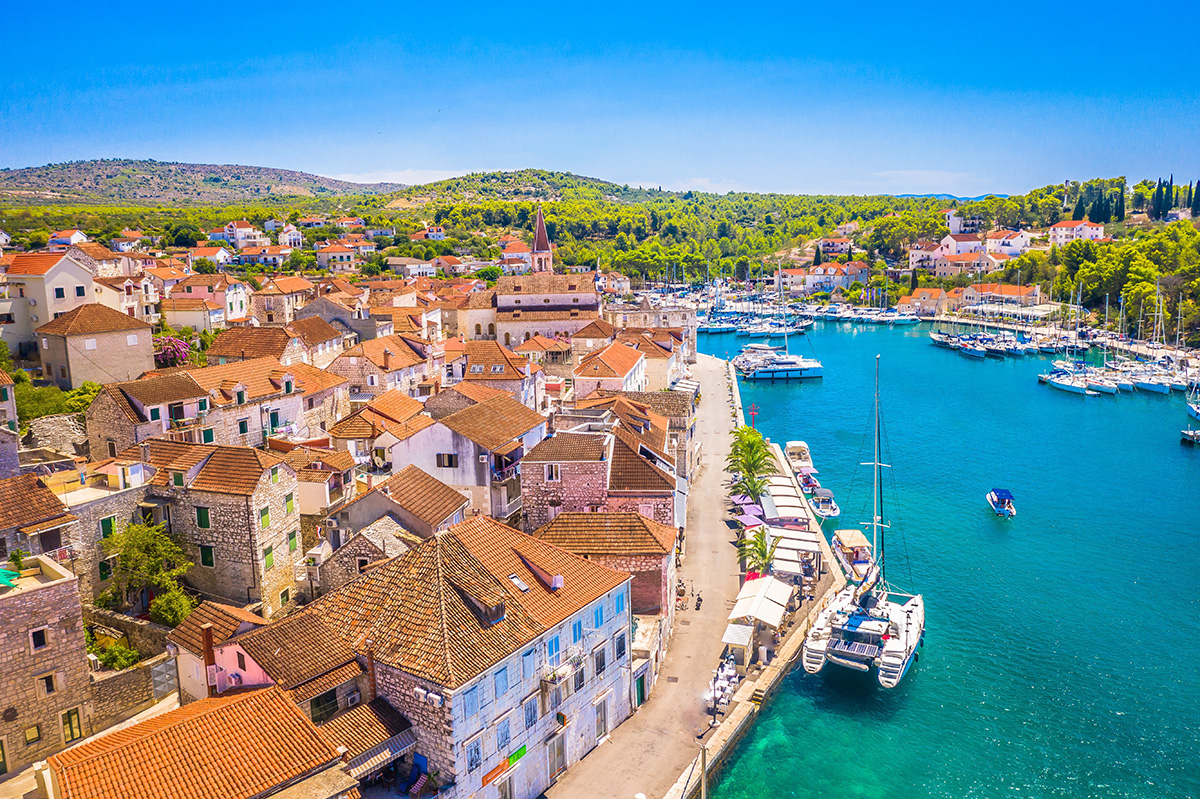
For a slower overnight atmosphere, smaller harbors such as Sutivan or Pučišća offer a more residential rhythm than high-traffic ports. Evenings unfold quietly along the quay. Locals sit outside cafés not because it is an event, but because it is habit.
Inland, Brač reveals another layer. Olive groves stretch across rolling terrain. Small family-run producers press oil in limited quantities. Wineries such as those near Nerežišća offer tastings that feel rooted rather than polished.
For those willing to leave the shoreline, hiking becomes part of the experience. A walk to Blaca Hermitage – a monastery built into steep cliffs by priests seeking isolation – requires effort. That effort preserves its impact. Arrival feels earned.
Climbing to Vidova Gora, the highest point on any Adriatic island, shifts perspective once more. From here, you see Hvar across the channel and understand the geography as a connected system. The islands are not scattered attractions. They are part of one maritime landscape.
Brač brings weight to the journey.
After Vis introduced historical depth and Hvar revealed cultivated diversity, Brač grounds the experience in craft, labor and terrain.
It anchors the Adriatic in something tangible.
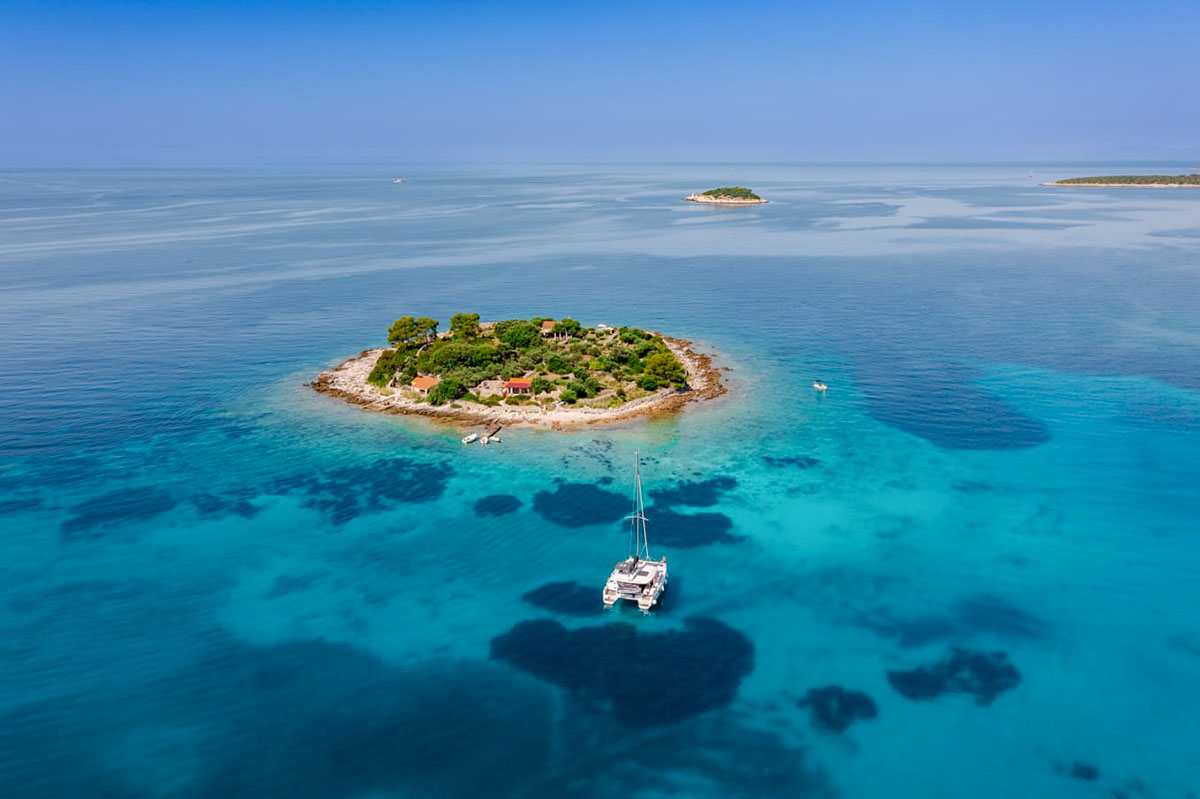
The final sail back to Split is short in distance but significant in meaning.
Leaving Brač behind, the mainland slowly rises ahead. The skyline you saw on Day 1 returns – but it no longer feels the same.
After Vis’s historical depth, Šćedro’s silence, Hvar’s cultivated plains and Brač’s stone landscape, Split no longer reads as an isolated Roman monument. It reads as a maritime hub.
From the water, its position makes sense. The protected harbor. The channel facing Brač. The natural corridor connecting islands and mainland.
You begin to understand that Split did not simply sit beside the Adriatic.
It depended on it.
The return completes the framework. The islands were not a detour from the city. They were context for it.
When you dock back in Split, the Adriatic is no longer scenery.
It is structure.
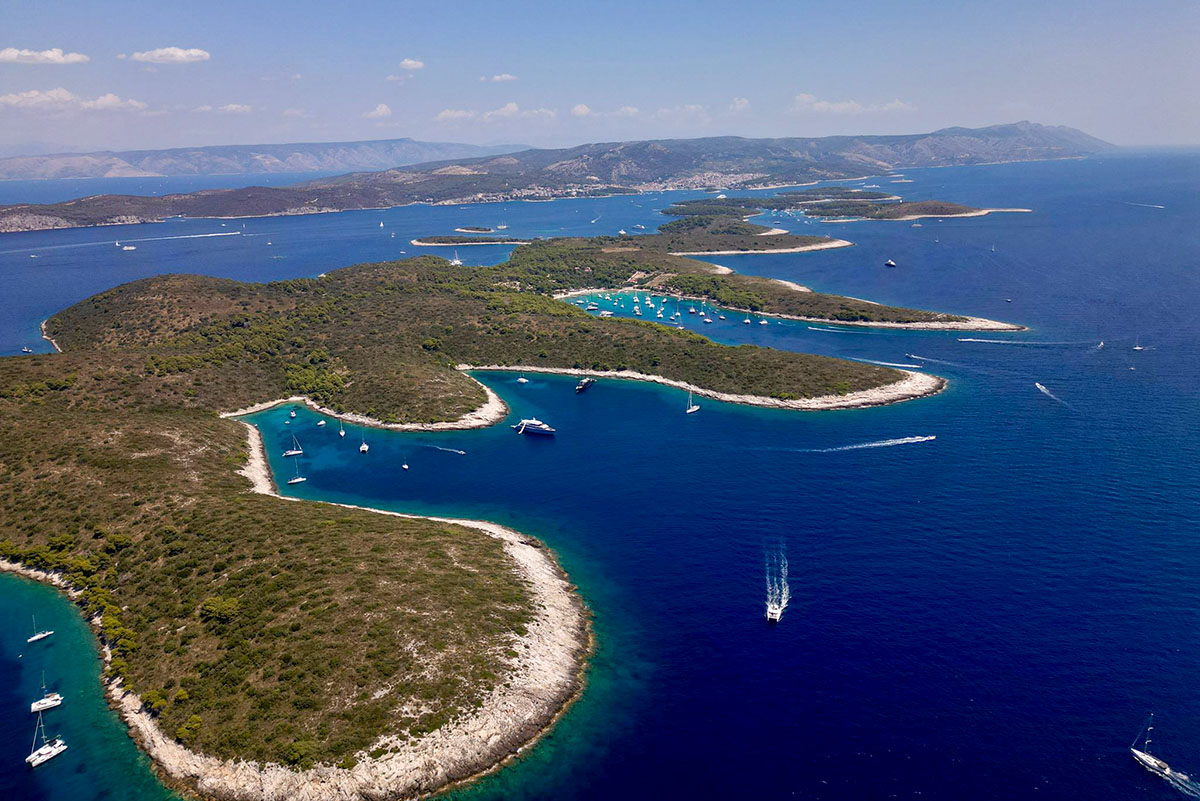
If you are considering sailing in Croatia, timing and structure matter more than popularity.
Croatia’s coastline is beautiful almost everywhere. What changes your experience is not which island you choose, but how you move through it.
Here are the principles that transform a sailing holiday from scenic to meaningful:
Approach famous locations outside peak midday hours.
A cove that feels crowded at noon can feel intimate in the early morning or late afternoon. Timing determines the atmosphere.
Anchor overnight instead of rushing back.
Many day visitors leave before sunset. Staying changes everything. Harbors calm down. Restaurants shift from service mode to local rhythm.
Explore inland villages, not only waterfront promenades.
The soul of the islands often lies away from the marina – in vineyards, olive groves and stone villages.
Choose smaller harbors over high-traffic marinas.
Residential ports often offer a more authentic evening atmosphere than major yacht hubs.
Sail with local skippers who understand daily rhythm patterns.
Wind direction, ferry schedules and excursion timing all affect how crowded a place feels. Local knowledge makes a measurable difference.
The geography does not change.
The rhythm does.
Sailing from Split allows you to experience Croatia without feeling like you are competing for space. It gives you access to the same famous coastline – but at a different tempo.
👉 Read: Best Sailing Routes in Croatia: Itineraries by Adriatic Region and Travel Style

This style of sailing is not about ticking locations off a list.
It is about moving through Dalmatia in a way that reveals its layers.
It suits:
It is especially ideal for travelers who value:
If your idea of travel is about immersion rather than accumulation, sailing from Split offers something rare: access without overload.
The Adriatic is not hidden.
It is simply experienced differently when you allow time to shape it.
👉 Read: Croatia Sailing 2025 Highlights – Our Guests are Our Greatest Asset
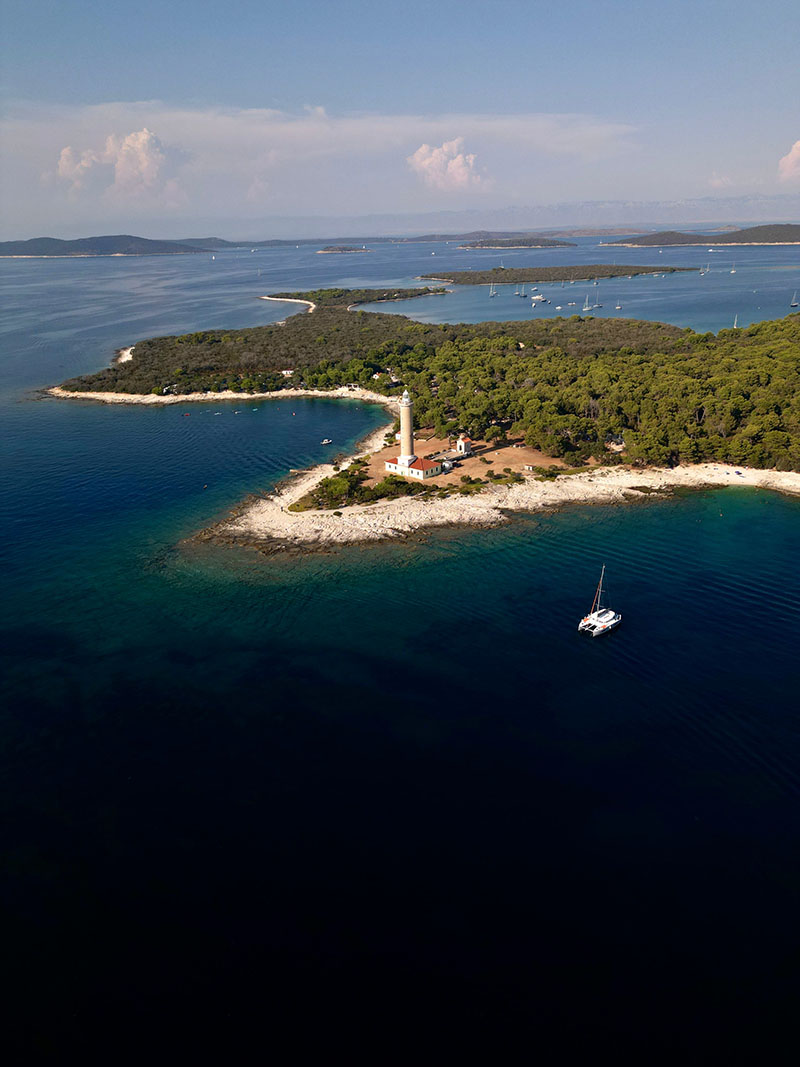
Discover our all-inclusive Croatia sailing holidays aboard modern catamarans exploring the Adriatic islands. Each journey combines experienced crews, carefully designed routes, and small-group sailing for a relaxed and seamless experience.
Choose between our 4-day sailing odyssey or a 7-day island-hopping adventure across Croatia’s most beautiful coastal regions.

All-inclusive cabin charter exploring Kornati & Krka National Park and the Šibenik islands.
⛵ Modern catamaran
👥 Small group sailing
🍽 Half-board included
🍷 Authentic Adriatic experiences
All-inclusive catamaran sailing exploring Kornati, Krka and the remote Adriatic island of Dugi Otok.
⛵ Modern catamaran
🌊 Island hopping
🍽 Half-board included
🍷 Authentic Adriatic experiences
All-inclusive private catamaran sailing across Croatia’s stunning islands and national parks.
⛵ Private catamaran
👨✈️ Skipper & host included
🧭 Flexible itinerary
📍 Custom Routes
Explore Croatia’s national parks through hiking, cycling and sailing in one seamless journey.
🥾 Hiking
🚴 Cycling
⛵ Catamaran sailing
🚐 Zagreb → Split Journey